Maybe none of these peeked your interest-maybe you’ve been wanting to create an o.c, but never really knew how to start-or you just enjoy making O.C’s….
This masterlist is to help you in making your own OCs….it can also apply to developing RP characters i suppose!(´ヮ`)!
Here are some useful resources I’ve found while I’ve been in the community, so I thought I’d share! PLEASE ADD YOUR OWN IF YOU HAVE ANY! And please reblog and share!
References
askmiddlearth – A great blog where you can send in questions and receive answers regarding just about any aspect of the Legendarium.
coco.raceme – A collection of quotes, songs, and important passages from The Hobbit and The Lord of the Rings, arranged by book and chapter.
Fish in Middle Earth – Did you ever want to know what kinds of fish there were in Middle Earth? No? You’ll probably end up reading this anyways. The curiosity will get to you.
henneth-annun – The HASA story archive has mostly moved to AO3 now, but this website still contains hundreds of timelines, character bios, quotes, object descriptions, and more.
silmarillionwritersguild – Essays, meta, biographies, and more – all about the plot and characters of the Silmarillion.
Languages
almare – Tumblr user almare has a great collection of Tolkien language resources, including a handy graphic of the relations between Elvish languages.
councilofelrond – A good resource for translations of canon texts, glossaries, conlang discussions, a dictionary, etc. Of particular interest is their Sindarin mutation chart, which is necessary pretty much whenever you’re stringing more than two Sindarin words together.
Hiswelókë’s – A delightfully thorough dictionary available in a variety of arrangements ( English-Sindarin, Sindarin-English, thematic, etc. ). Available in English, French, and German.
midgardsmal – The blog of David Salo, one of the people who worked on the languages in Peter Jackson’s Tolkien films.
realelvish – A handy phrasebook that provides categories for easy searches, dialects, pronunciation, and multiple translations of the same phrase. Includes fun categories, such as ‘in the bedroom’ and ‘on the internet’, as well as many others that are more in keeping with Tolkien’s tone.
sindarinlessons – A collection of rules, references, and explanations of Sindarin grammar.
your-sindarin-textbook – On this site, a duck teaches you Sindarin. What more could you want? Includes exercises and references.
Books
All the books in PDF – These two posts both contain links to Tolkien’s works and where you can find them online.
HoME reading order – tumblr user lintamande has put together a list of Tolkien’s texts beyond the Silmarillion, in case you were wanting to dip your toes into HoME but didn’t know where to begin. They also have a general Silm resource page that’s worth looking at, as well as all their meta.
Tolkien’s letters – A collection of many of Tolkien’s transcribed letters, useful for all those really obscure facts you need to check and to impress your friends.
Non-Tolkien
A shameless plug– I do my best to collect useful references, notes, and masterposts on writing, Tolkien, and more in my ‘references’ tag.
howtofightwrite– This blog contains discussions on weapons and how they’re used, as well as some particularly useful weapon primers that will give you the basics on the weapons your character uses.
Medieval references – A collection of a few useful references for medieval-type jobs, terms, and more.
Mood music – Themed music playlists for just about anything you could ever want to write.
Traveling – The methods of traveling in the Middle Ages, and the time it would require.
Adding links for the Lord of the Rings Family Project, which has the best set of genealogies hands down and I constantly reference it.
Ardalambion is a high quality language resource and has extensive wordlists. Good for obscure languages like Nandorin and Taliska. It’s more in-depth than a dictionary and has notes on in-universe and out-universe history for the languages.
Textual Ghosts Project, a list of unnamed and missing female characters from Tolkien’s works.
Notes: some of the book links don’t work any more.
The working link for OP’s resources tag is now here.
This is really useful! Thanks to OP for collecting these! (I totally looked at the fish essay.)
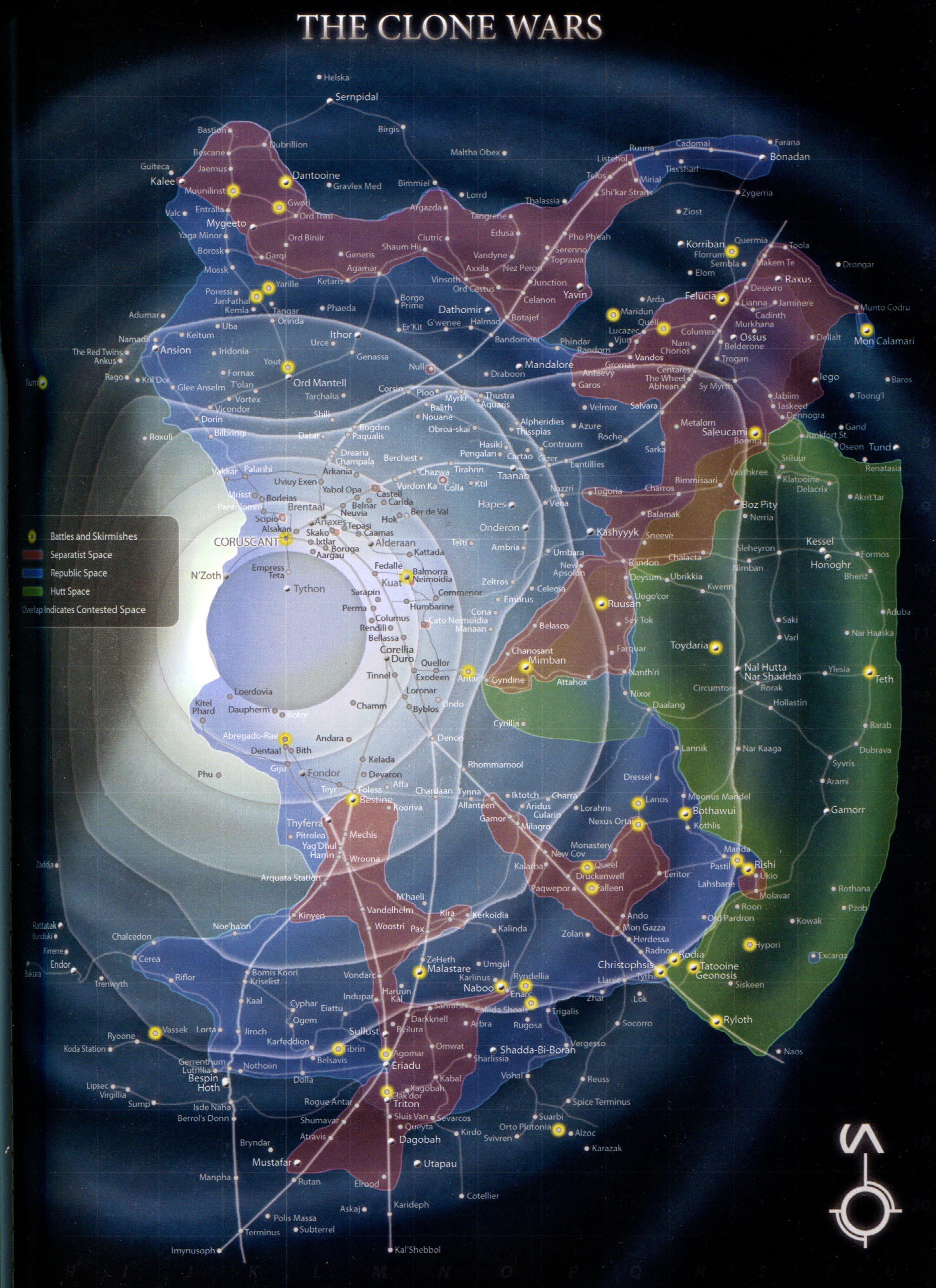
I’m posting a handful of SW galaxy maps here to consolidate them for my own use, but some of you SW fic writers might find them useful too. Be aware that there will be occasional inconsistencies between all of them due to Lucasfilms/Disney using numerous authors and artists, EU vs. Legends vs. New Canon, and different fan interpretations of any conflicting materials.
The top 4 images are from my copy of Star Wars: The Essential Atlas. The bottom image is from my copy of The Imperial Handbook: A Commander’s Guide (placing this map somewhere in the post-RotS/OT era). All of the other images I tried to upload were… not very good quality, so I’ve provided links to more SW maps below instead.
All Padawans of races that grow hair have a braid behind their right ear. Braids have a yellow band at the top and a red band at the bottom. Additional beads or other color bands are added to mark the Padawan’s area/s of study.
The yellow band is applied when a Master takes on the Padawan before 13 standard years of age. The red band is applied after 16 standard years of age when he/she completes their Temple courses and starts studying independently under the guidance of his or her Master.
Anakin had red and blue bands. Mechanics and piloting.
Obi Wan had red and yellow bands. Piloting and weapons.
Ahsoka in Clone Wars is still young and so has only one yellow bead for her notable saber technique.
Braids are cut by the Master’s lightsaber upon the Padawan’s completion of the Trials (generally around 20 standard years but often earlier or later depending on the student). Jedi who are expelled from the Order prior to completing their training have their braids ripped out rather than cut. Ouch!
Source: Various SWEU books, but mostly “The Jedi Apprentice”
Obviously there’s a lot of overlap between the three, despite their differences, which is why this is all one post. In fact, some of the articles have one of those words in their title but the content of the article belongs in one of the other categories.
I think the links about the antagonist’s journey are some of the most interesting on this list.
Well, there are many different types of horses. Some categories of horse describe the gender and age of the horse. Under a year old, they’re called a foal, 1-2 years are called a yearling, under four years gets you a colt (male) or filly (female). Older males are stallions, older females are mares.
After that, in the Middle Ages, the horse was identified by the task it was to do. It’s important to note that not all horses were bred and trained for war. The strongest and tireless of horses were draft horses, meant to pull plows and perform other hard manual labor. Smaller, more sure-footed workhorses would be used as packhorses, since they were better on longer marches where the terrain could become uneven and broken. Other workhorses were driving horses, meant to pull carriages much like the one Queen Cersei rides on to visit the north.
The destrier was the largest of the war horses, large, strong, and high-spirited. These were expensive as far as horses go. More common was the more inexpensive courser, a lighter, faster breed that still carried great strength. These would be your heavy cavalry horses, used by well-off knights.
The rouncey was a smaller, more versatile horse. These horses were swifter breeds, great for fast pursuit. They were also relatively inexpensive, ridden by squires and often provided by a knight for the use of his squires and other attendants. These horses could carry packs and still saw use on the battlefield.
Further down were skirmish horses, like the Spanish jinete or the Irish hobby. These light horses were ideal for rapid movement. Robert the Bruce used them to tremendous effect, covering 60 miles a day on his steeds. The Berbers were legendary for their scouting, skirmish, and mobility upon their light steeds. These were too light to use as heavy cavalry, and so they would be put on the skirmish line, harassing an advancing enemy and retreating behind the infantry, perhaps to pounce on an unguarded flank should the course of battle turn that way, and useful still for running down routing opponents.
Now a palfrey was a riding horse, noted specifically to be prized for their comfortable ambling speed when traveling long miles. This was a valuable riding horse, with speed to match the fastest of war horses and a cool, even temperament and riding style. Especially in a large land like Westeros, a palfrey would be highly prized, which is why Wyman Manderly, when he offers palfreys to the three Freys at White Harbor, is considered quite generous.
Not easily. My department chair in college focused on non-violent
revolutions when he was getting his doctorate. His comment at the time was that
there’s virtually no (scholarly) literature on the subject.
Avoiding violence in a revolution requires two things: You need to convince
those in power not to use violence to enforce their authority and you need to
convince everyone in the opposition from resorting to violence and deliberately
escalating the situation.
The former is very difficult, the latter is nearly impossible.
When you’re looking at the factors that create a revolution, you’re
primarily interested in oppression, exclusivity and capacity.
Oppression is fairly self explanatory, but the fact remains, if a government
is not mistreating its citizens, or the vast majority of the population
considers the system just, then you won’t have people rising up in revolt.
People are stirred to action when they feel wronged. Normal bureaucratic
malaise doesn’t cut it.
More disturbingly, it can be incredibly difficult to detect oppression,
depending on how it is presented. If the population doesn’t feel oppressed,
then they’re not going to rise up, even as members of society are being put
down brutally and executed in the streets.
Exclusivity is the ability for private citizens to affect the government. An
exclusive government is one that does not allow the civilian population to
influence policy. It may also be highly nepotistic, with many key positions
filled by family members of the head of state, or by close friends.
As with oppression, exclusivity is highly dependent on public perception. A dictator
that frequently takes public input under advisement and acts on it wouldn’t be
an exclusive system, even if their entire cabinet is made up of family members
and close personal friends. Likewise, a state with rigged elections, and no
public input wouldn’t be perceived as exclusive, unless the voter fraud is
exposed.
It’s also worth pointing out, a state can be oppressive and exclusive, but still
be perceived as the protector of its population. In these cases, you won’t see
a revolution because people believe the state has their interests in mind. Of
course, if the illusion shatters, everything else follows.
Capacity is the ability for a government to enforce its will. In the context
of revolutions, we’re normally interested in its ability to inflict violence on
the population.
Again, if a government has the capacity to kill everyone involved in the
revolution they’ll hunt them down as a warning to any future rebels. Remember,
when we’re talking about what the government can actually do, not what
it should hypothetically be capable of if everything goes according to plan.
Capacity rises and declines based on a number of factors. Their available manpower,
their financial and material resources, the quality of their intelligence.
Prolonged warfare, military dissent, economic unrest, technical obsolescence,
counterintelligence, deteriorating public support and espionage (among other
possible factors) can all whittle away at a state’s capacity.
What you’re looking for in a revolution is an oppressed population who
cannot influence government policy and a weak state. If any of these three
elements fail, then your revolution can’t happen, at least not normally.
A non-oppressive totalitarian regime sounds weird. It’s a kind of political
philosophy unicorns that keeps coming up in hypothetical discussions on
governance. From Plato to Machiavelli, the idea refuses to die.
A powerful and oppressive regime with public access is also, surprisingly,
hard to unseat. There have been plenty of examples of these without associated
revolutions.
Well funded and equipped, totalitarian regimes are, sadly, something we have
plenty of examples of. A number of these did eventually fall to revolutionary
forces, but it only came after the state’s capacity was undermined or decayed.
Under normal circumstances, you have a state that’s subjugating it’s
population, an isolated elite pulling the strings, and a government that can’t
actually wipe out a potential rebellion before it gets rolling, and recruiting
real numbers, and engaging in actual combat operations.
In a non-violent revolution, you need to convince the state to sit down and
listen to your grievances without resorting to violence. The reason I described
this as “very difficult,” is because, you need to sit down with someone and get
them to agree with you, when their first impulse is going to be to toss you in
prison and wash their hands of the problem.
This can happen. When the threat of violence, and a painful death appears imminent,
and your revolutionary is offering a way out that doesn’t end with the city in
flames and the roads coated in blood. Managing to actually do this is truly
impressive stuff, and most of the people who have attempted this in the real
world ended up imprisoned and/or tortured.
Your revolutionary can’t step in earlier, because the state won’t listen,
and once the situation has degenerated into outright warfare, it’s too late.
The second problem is that revolutions are not homogenous entities that operate
as a single coherent organization. They’re a coalition of groups who are
unified by one common belief, that the state needs to be replaced, and not much
else. They can agree that the guy in power needs to go, but not what the shape
of the new government will be, after it’s over.
In case you’re wondering, you can’t really skip the coalition building phase
of getting a revolution off the ground. Having a single, ideologically unified
group to overthrow the government would be ideal, but reality is rarely so accommodating.
Finding enough people to actually overthrow the government means making
unlikely allies, and working with people you normally wouldn’t want to talk to.
They have live bodies, and together you’ve got enough to turn the tide. “Stand
together or die alone,” and all that.
Keeping everyone non-violent before the revolution is hard enough. You’ve
got a lot of people who have a grudge against the existing government. These
are people who feel strongly enough about their grievances to die for them. Finding
enough people who are willing to do that is hard enough. Finding enough people
who are willing, are smart enough to realize that there might be a way out of
this without killing, and are also okay with a non-violent solution to the
situation is nearly impossible.
A revolutionary leader who can hold their movement together on sheer force
of will, and can inspire people into a unified cause can, potentially knit
their revolution together to prevent this. Someone who is very careful in how
they bring people in, and how their revolution operates can, potentially, keep
this from becoming a problem.
After it’s over is the nearly impossible part. When all of these different
factions united by one common goal have achieved that, the only thing they have
left is a desire to reshape the state to suit their image of how things should
be. Far too often, this translates into purges and civil war.
In a non-violent revolution, overthrowing the government is the easy part.
Keeping all of the different political factions, which were oppressed under the
previous regime playing nice while you try to build a new state is the hard
part.
The most dangerous thing after the revolution is someone more ruthless than
you. Revolution is not a pleasant business. It destroys the idealists and rewards
the pragmatic and ruthless. The process of running one is a crucible. No one
who goes in will come out exactly the same person. After the revolution, if you’re
not the most ruthless person in the room, you’re not long for this world.
Keeping a coalition together after a revolution isn’t impossible. There are
historical examples, including the United States, but it is an exceedingly
difficult bar to hit. It’s far more common for the victors to begin by purging
remnants loyal to the old regime, and then work their way through various minor
factions who aided them, but are no longer necessary, and have become a
potential liability. This can be framed any number of ways. It can be carried
out covertly, it can be framed as remnant loyalists, it can be treated as
normal criminal arrests.
In cases where the prior regime was supported by a foreign power, these
purges are often couched in terms of removing foreign agitators or spies.
In fact, it’s very easy to end up exactly where you started, or worse off.
The best case examples are probably Gandhi and Nelson Mandela. Mandela kept
South Africa together by instituting policies that kept members of the Dutch
government as members of the new integrated government, and pushed hard for a
policy of no retribution. This, arguably, did a lot to keep South Africa
intact. In contrast, while Gandhi managed to remove the British from India
without resorting to violence, he did see his nation break apart into separate states.
Even if your revolution manages to hold themselves together, and don’t turn
on each other, they’ve created a serious problem. They’ve destroyed their state’s
capacity, creating a power vacuum. Other factions that may not have
participated in the revolution are now in a far better position to exploit the
current situation. This could include groups like organized crime, or even
foreign powers, who aren’t above using the chaos to opportunistically grab a
few bits for themselves.
Non-violent revolutions aren’t a panacea against this either. Even simple
political instability can open the door for an aggressive foreign power to move
in, “in order to ensure the peace” and annex anything that’s not nailed down.
It also allows organized criminal enterprise to become more brazen; even under
the best circumstances, you’ve removed the checks that were holding them in
place, and any less oppressive policies will be viewed as a practical
invitation.
A military junta isn’t off the table either. This is especially true if the previous
regime kept the military under control because of close personal ties, and the
transition to the revolutionary government would diminishes the military’s
political influence. They may even view this as an act of self defense. Sadly,
the term “military junta” is an established phrase because this exact kind of
coup has happened many times before, including cases where there was a
democratic regime change, and not an actual revolution.
So, how would someone walk into all
of this and keep it from degenerating into a bloodbath? Search me. You’re
talking about a very singular kind of character, and they could still end up
splattered across the pavement because of a fanatic.


 radiantanor.home.blog