wolf gently howling, rain pouring, thunder crashing. This is so dang soothing….
This is entirely my aesthetic
So I live at the base of a mountain and we’ve always had a den of coyotes in the back of our neighborhood which is two streets behind my house. Well, a few weeks ago, we discovered that there is a wolf that has joined this pack of coyotes. How do we know? Every night around sundown, the coyotes get wound up and start howling (it’s pretty cool to hear bc you can even hear the pups). Well this day they went on for a while and all of the sudden we hear a louder, stronger howl that made every single one of them quiet down….. when I tell you it was the most hauntingly beautiful thing I’ve ever heard, I’m not lying.
“Lie close,” Laura said, Pricking up her golden head: “We must not look at goblin men, We must not buy their fruits: Who knows upon what soil they fed Their hungry thirsty roots?”
A wolf goes for a walk in the woods and meets a dog for the first time
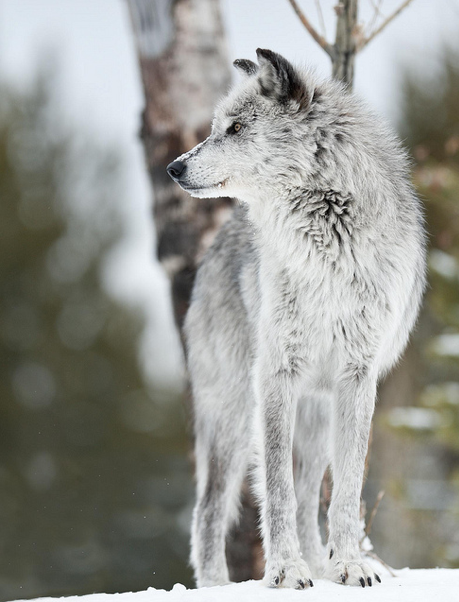
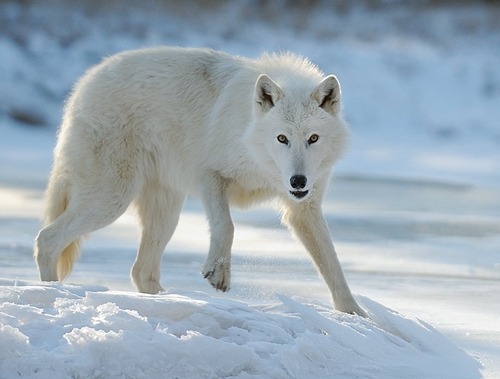
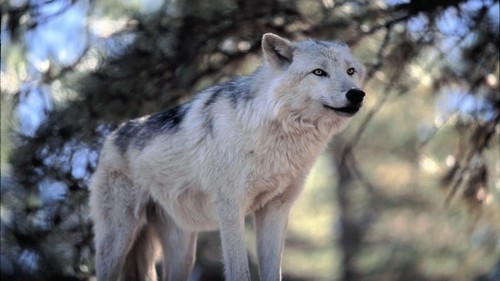
– Gray wolves (Canis lupus) can have coat colours or colour combinations ranging from black, grey, white (though never a “pure”, bright white as seen in domestic dogs), brown, blonde, “silver”, reddish/orange. The Gray wolf has a lot of subspecies, and each subspecies has it’s own variation in colour. Some can come in all colours named above, whereas other Gray wolf subspecies for example only come in white.
If you want to know the coat colour possibilities of a certain Gray wolf subspecies, you can easily find that online.
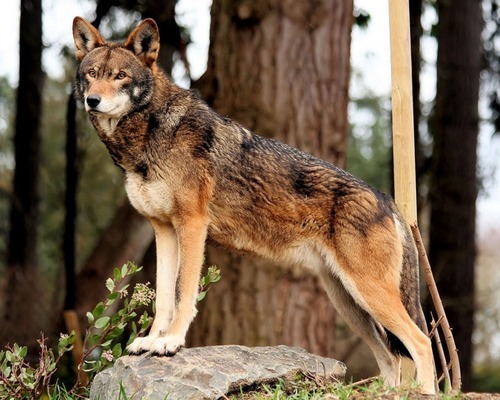
– Red wolves (Canis rufus) always have a combination of the colours orange/reddish, brown and grey, with black markings, along with some white parts and some black parts like in the tip of their tail:
All of the depicted coat colours above of course can have lots of variations – especially the darkness/brightness and contrast. No wolf looks the same. It’s very difficult to map out all the different possibilities, but this gives a good overview.
Also, here’s a nice chart with pictures of some wolf subspecies that shows the typical coat colour for each subspecies.
It seems like all of the resources I can easily find online for identifying wolves vs dogs are either massive and difficult to understand without prior knowledge of the subject, or extremely bare-bones and miss a lot of key information. I tried to hit a comfortable middle-ground. (sorry if it’s a little wordy) This tutorial is made as a reference for drawing, so everything but purely visual differences between dogs and wolves have been left out.
I’ve been wanting to make this for a while now, so I’m glad I finally sat down and did it!
**EDIT** When it comes to the section on wolfdogs, please take it with a grain of salt. With something as complicated as genetics, they are of course, not going to be as simple as I make it seem. What features different levels of content can display, and even which percentages designate which levels of content are often hotly debated within the wolfdog community. At this point I’ve elected not to change the image set itself because: a. it’s a huge pain in the ass b. this is a tutorial for beginning artists. It’s meant to be a hugely simplified version of the topic, and I’ve stated clearly that it is NOT to be used in real-world identification.
**EDIT 2** A couple people have noted that the puppies section is a little misleading. Wolf puppies will always be born a solid brown, but that brown can range from a very dark brown (appearing as black) to a llight, gray-ish brown. The important point is that wolf pups will always be a solid colorwith even less distinguishable markings than even adult wolves. (also this guide does not include color possibilities related to birth defects or other genetic anomalies such as albinism)
((Huge thanks to yourdogisnotawolf. who’s blog inspired me to make this and for digging up that amazing picture of the wolf/lab mix))






 radiantanor.home.blog