
Time for some kitchen charts to help you adult better 😉
Great for my fellow kitchen witches
Even if you’re not a kitchen witch, this is still an excellent resource for people who want to learn cooking tips
Schlagwort: reference
Science side of Tumblr: how can dragons breathe fire?
There are three variants of dragons.
One of them possesses a gland that produces a liquid, which spontaneously combusts when coming into contact with oxygen. Some phosphorus compounds could do that for example.The second one possesses two glands instead, which produce so-called hypergolic propellants, fluids that ignite when they come into contact with one another.
The third kind stores the methane bacteria in their stomach produce, and expells it when breathing fire. In their mouth there’s a piezoelectric crystal, which is a substance that produces a spark when placed under mechanical stress and could thus serve to ignite the methane gas.
Or it’s magic.
Historically Authentic Sexism in Fantasy. Let’s Unpack That.
As someone who originally trained as a social historian of the Medieval Period, I have some things to add in support of the main point. Most people dramatically underestimate the economic importance of Medieval women and their level of agency. Part of the problem here is when modern people think of medieval people they are imagining the upper end of the nobility and not the rest of society.
Your average low end farming family could not survive without women’s labour. Yes, there was gender separation of labour. Yes, the men did the bulk of the grain farming, outside of peak times like planting and harvest, but unless you were very well off, you generally didn’t live on that. The women had primary responsibility for the chickens, ducks, or geese the family owned, and thus the eggs, feathers, and meat. (Egg money is nothing to sneeze at and was often the main source of protein unless you were very well off). They grew vegetables, and if she was lucky she might sell the excess. Her hands were always busy, and not just with the tasks you expect like cooking, mending, child care, etc.. As she walked, as she rested, as she went about her day, if her hands would have otherwise been free, she was spinning thread with a hand distaff. (You can see them tucked in the belts of peasant women in art of the era). Unless her husband was a weaver, most of that thread was for sale to the folks making clothe as men didn’t spin. Depending where she lived and the ages of her children, she might have primary responsibility for the families sheep and thus takes part in sheering and carding. (Sheep were important and there are plenty of court cases of women stealing loose wool or even shearing other people’s sheep.) She might gather firewood, nuts, fruit, or rushes, again depending on geography. She might own and harvest fruit trees and thus make things out of that fruit. She might keep bees and sell honey. She might make and sell cheese if they had cows, sheep, or goats. Just as her husband might have part time work as a carpenter or other skilled craft when the fields didn’t need him, she might do piece work for a craftsman or be a brewer of ale, cider, or perry (depending on geography). Ale doesn’t keep so women in a village took it in turn to brew batches, the water not being potable on it’s own, so everyone needed some form of alcohol they could water down to drink. The women’s labour and the money she bought in kept the family alive between the pay outs for the men as well as being utterly essential on a day to day survival level.
Something similar goes on in towns and cities. The husband might be a craftsman or merchant, but trust me, so is his wife and she has the right to carry on the trade after his death.
Also, unless there was a lot of money, goods, lands, and/or titles involved, people generally got a say in who they married. No really. Keep in mind that the average age of first marriage for a yeoman was late teens or early twenties (depending when and where), but the average age of first marriage for the working poor was more like 27-29. The average age of death for men in both those categories was 35. with women, if you survived your first few child births you might live to see grandchildren.
Do the math there. Odds are if your father was a small farmer, he’s been dead for some time before you gather enough goods to be marrying a man. For sure your mother (and grandmother and/or step father if you have them) likely has opinions, but you can have a valid marriage by having sex after saying yes to a proposal or exchanging vows in the present (I thee wed), unless you live in Italy, where you likely need a notary. You do not need clergy as church weddings don’t exist until the Reformation. For sure, it’s better if you publish banns three Sundays running in case someone remembers you are too closely related, but it’s not a legal requirement. Who exactly can stop you if you are both determined?
So the less money, goods, lands, and power your family has, the more likely you are to be choosing your partner. There is an exception in that unfree folk can be required to remarry, but they are give time and plenty of warning before a partner would be picked for them. It happened a lot less than you’d think. If you were born free and had enough money to hire help as needed whether for farm or shop or other business, there was no requirement of remarriage at all. You could pick a partner or choose to stay single. Do the math again on death rates. It’s pretty common to marry more than once. Maybe the first wife died in childbirth. The widower needs the work and income a wife brings in and that’s double if the baby survives. Maybe the second wife has wide hips, but he dies from a work related injury when she’s still young. She could sure use a man’s labour around the farm or shop. Let’s say he dies in a fight or drowns in a ditch. She’s been doing well. Her children are old enough to help with the farm or shop, she picks a pretty youth for his looks instead of his economic value. You get marriages for love and lust as well as economics just like you get now and May/December cuts both ways.
A lot of our ideas about how people lived in the past tends to get viewed through a Victorian or early Hollywood lens, but that tends to be particularly extreme as far was writing out women’s agency and contribution as well as white washing populations in our histories, films, and therefore our minds eyes.
Real life is more complicated than that.
BTW, there are plenty of women at the top end of the scale who showed plenty of agency and who wielded political and economic power. I’ve seen people argue that the were exceptions, but I think they were part of a whole society that had a tradition of strong women living on just as they always had sermons and homilies admonishing them to be otherwise to the contrary. There’s also a whole other thing going on with the Pope trying to centralized power from the thirteenth century on being vigorously resisted by powerful abbesses and other holy women. Yes, they eventually mostly lost, but it took so many centuries because there were such strong traditions of those women having political power.
Boss post! To add to that, many historians have theorised that modern gender roles evolved alongside industrialisation, when there was suddenly a conceptual division between work/public spaces, and home/private spaces. The factory became the place of work, where previously work happened at home. Gender became entangled in this division, with women becoming associated with the home, and men with public spaces. It might be assumable, therefore, that women had (have?) greater freedoms in agrarian societies; or, at least, had (have?) different demands placed on them with regard to their gender.
(Please note that the above historical reading is profoundly Eurocentric, and not universally applicable. At the same time, when I say that the factory became the place of work, I mean it in conceptual sense, not a literal sense. Not everyone worked in the factory, but there is a lot of literature about how the institution of the factory, as a symbol of industrialisation, reshaped the way people thought about labour.)
I am broadly of that opinion. You can see upper class women being encouraged to be less useful as the piecework system grows and spreads. You can see that spread to the middle class around when the early factory system gears up. By mid-19th century that domestic sphere vs, public sphere is full swing for everyone who can afford it and those who can’t are explicitly looked down on and treated as lesser. You can see the class system slowly calcify from the 17th century on.
Grain of salt that I get less accurate between 1605-French Revolution or thereabouts. I’ve periodically studied early modern stuff, but it’s more piecemeal.
I too was confining my remarks to Medieval Europe because 1. That was my specialty. 2. A lot of English language fantasy literature is based on Medieval Europe, often badly and more based on misapprehension than what real lives were like.
I am very grateful that progress is occurring and more traditions are influencing people’s writing. I hate that so much of the fantasy writing of my childhood was so narrow.
This is great!
Adding that quite a bit of recent research suggests that a significant portion of European women in the Middle Ages never married at all, and they didn’t all become nuns. Plenty of “singlewomen” lived on their own, or in households with a few other women, or as domestic servants in larger households. If they lived on their own, they too might raise some chickens, spin, brew, take in laundry, or do other manual tasks for wages. In some places they could practice specific skilled crafts (often textile-related) and join guilds. Were a good number of these women lesbians, or ace? Quite probably.
There is a lot more to the past than what we think we know from seeing the same canned images in media over and over again.
This is why I tend to jump up and down like I am slightly unhinged and tell people to READ PRIMARY SOURCES. (In translation if you’re not an academic; I’m not nuts.) But even the primary sources from a fairly basic medieval history class will give you a much wider view of history as it was lived than the flat recycled stuff we see filtered through the mesh of (a very specific kind of) nostalgia.
If you want to really stretch your idea of who a medieval/renaissance woman was or what she could do, read Marie de France or Margery Kempe or Christine de Pizan–or any number of Norse sagas (ask me about
Hallgerthr and Bergthóra!). But even if you stick to the “mainstream” classics, your Canterbury Tales or your Gawain and the Green Knight or your Two Lives of Charlemagne, if you pay attention, you will notice a lot of women doing a lot of fascinating things that do not boil down to ‘being pretty’ and ‘being assaulted,’ which is what a lot of historical fiction and historical fantasy would like to boil us down to.
Also, let me be honest here, primary sources are just fun. They can be slow going at first, but the thing that really sold me on history when I was in college was not sweeping descriptions of battles. It was this one bit in a history by Notker the Stammerer (and how can you beat that as an author’s name?) where Charlemagne was bitching and moaning about Kids These Days and their inadequate cloaks, which aren’t even long enough to keep you warm when you have to get down off your horse and pee.
History is a million times richer than most of us give it credit for, including in the lives of women, I guess is my point. Also: READ PRIMARY SOURCES. They will upturn a lot of your assumptions about the lives of women, and of people in general–and they’re just a delight.
And Jean Froissart’s Chronicles! His gymnastics around Isabelle the She-Wolf are hilarious, but there is a ton of gold there. (There are assaults, but firmly depicted as terrible sinful crimes to be rightly punished.)
Also, I’ve read some interesting research on nuns, who virtually never accepted any dictates about detaching themselves from their birth families, and would negotiate through correspondence with their siblings, parents, cousins etc, with whom they often had incredibly intense bonds. And nuns brought up in convents seem to have been much more willing to be “fuck all y’all” than noblewomen who became nuns—contrary to a lot of (lbr, Protestant propaganda-fueled) ideas about the medieval Church. Like, the wrangling between bishops and abbesses over pilgrimages alone is amazing.
Historically Authentic Sexism in Fantasy. Let’s Unpack That.
So I found this cool website for learning ancient languages
go wild
holy fuck
I just did a quick perusal of the Coptic resources on this site, and it has all the resources I’ve personally found worthwhile and then some. These are resources that took me months, if not years, to discover and compile. I am thoroughly impressed. The other languages featured on the site are:
- Akkadian
- Arabic
- Aramaic
- Church Slavonic
- Egyptian (hieroglyphics and Demotic)
- Elamite
- Ethiopic (Ge’ez)
- Etruscan
- Gaulish
- Georgian
- Gothic
- Greek
- Hebrew
- Hittite
- Latin
- Mayan (various related languages/dialects)
- Old Chinese
- Old English
- Old French
- Old Frisian
- Old High German
- Old Irish
- Old Norse
- Old Persian
- Old Turkic
- Sanskrit
- Sumerian
- Syriac
- Ugaritic
For the love of all the gods, if you ever wanted to learn any of these languages, use this site.
Likely helpful for various recon-oriented polytheists.
The Anatomy of a mermaid
yes, thanks.
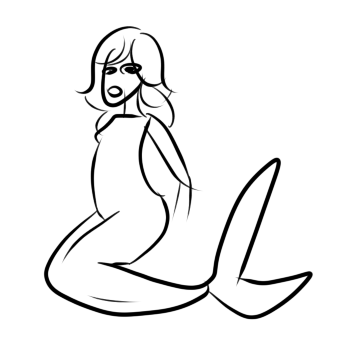
i hate when people draws mermaid’s tail like it was some sort of goddamn suit on normal human legs like this:
it just doesnt work
yeah we wouldnt want to make our mermaids too unrealistic
this asks more questions than it answers. they don’t really have vestigial legs, like those aren’t even motile fins, so why do they still have fully formed hips, why hasn’t the pelvic bone changed significantly? and where did the tail come from?
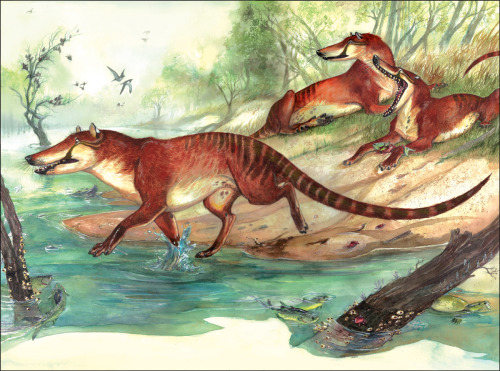
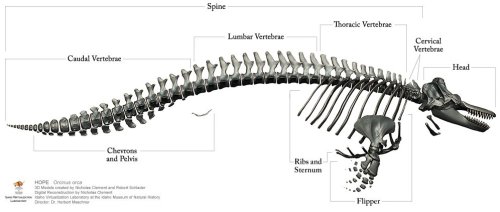
whales as we know them evolved from land animals that went back out to sea, and it’s all spine all the way down to the tail fin. the pelvis is vestigial to the point of being tiny and unrecognizable, and the rear leg structure is //gone//. and by the time they evolved all that, their forelegs had turned into proper fins and they didn’t have hourglass figures, because they built up walls of insulating fat and blubber where it was needed most – around the vital organs.
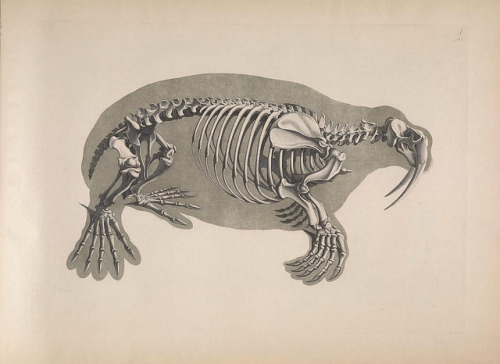
which brings us to the walrus. as you can see the skeletal structure and the external appearance are fairly ursiform – the rear legs are basically still in there forming the tail, and the pelvis is intact, and above that it may as well still be a land animal. if mermaids did exist, as hominids who went back out to sea, and if they hadn’t evolved into basically dolphins, then a walrus skeletal system, complete with vestigial thigh bones inside a kind of muscle skirt, and with significant fat and blubber deposits //on the main body// would be most likely. which is to say, mermaids with human torsos and seagoing lower bodies would waddle around on their tails, have clearly defined thigh structures, and would be a hell of a lot rounder above and about the waist than they’re usually depicted.
which begs the question, then, if you see a mermaid and it’s a skinny little thing with a slinky waist and an eel-like tail and a perfect bosom and a coy smile, //why does it look like that//? because whatever that is? it is not a land animal that readapted to the sea. it is not your distant kin. it is a sea creature that adapted //to get your attention//.
maybe it’s all an illusion, a frilly mane, an hourglass shape, and narrow antennae that mimic the shape of human arms, waving lonely sailors into the water, only to realize too late the bioluminescent patterns of lipstick and pert breasts are to distract from what lies behind them – viselike jaws and row after row of stiletto teeth.
or maybe it’s all soft tissue, the gelatinous bell of a jellyfish folded into a pleasing shape, luring the unwary down to be caught up in a tail that is nothing more than thousands of barbed lines of stinging neurotoxin cells.
or it could be that the tail goes deep into a shadowy well, and the beautiful woman is a mask for a single enormous jaw, the internal skeleton just the endless spine and ribs of a vast and hungry sea snake.
or, perhaps most terrifyingly, the face is real but not the face of the eyes looking out of it – a human mask for an intelligence both cold and calculating, wearing an inviting smile to bring you within reach of the dagger behind it’s back. waiting to slice the skin off of you because it needs a new disguise, because it is shaped like you but does not look like you, because it must pass as you so it can go among you, so that by starlight it may go on land and into town, where your kin are sleeping, unsuspecting.
Jesus Christ back up a minute buddy
I am 100% on board with eldritch horror mermaids.
Can I set up something to just reblog this every time I see it? Like automatically? Because this is perfect and I love this.
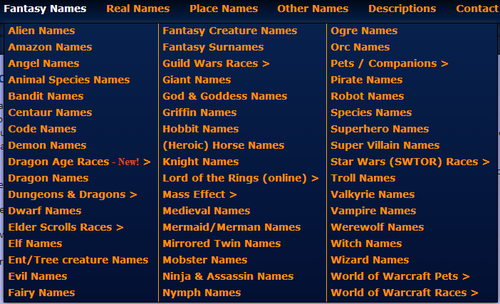
i dont think you guys appreciate how rad this site is
because first of all you got your basic fantasy and game race names for like
everything
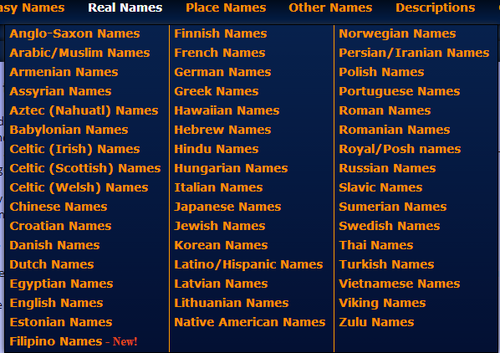
BUT AS IF THAT ISN’T ENOUGH
REAL NAMES WHICH ARE GOOD FOR BOOKS
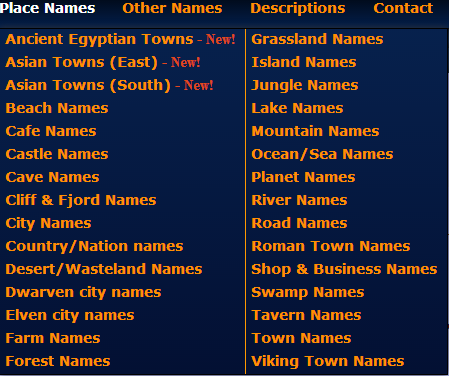
AND THIS THERE’S MORE????
BAM, PLACE NAMES
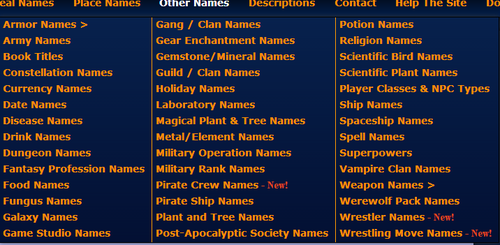
AND STILL MORE
SO YOU SEE THESE LITTLE OPTIONS HERE
PLEASE, PLEASE
GO AND TRY TO HELP A GOOD PERSON OUT
This is my go to site for naming literally anything.

Resources for Tolkien fans
Here are some useful resources I’ve found while I’ve been in the community, so I thought I’d share! PLEASE ADD YOUR OWN IF YOU HAVE ANY! And please reblog and share!
References
askmiddlearth – A great blog where you can send in questions and receive answers regarding just about any aspect of the Legendarium.
coco.raceme – A collection of quotes, songs, and important passages from The Hobbit and The Lord of the Rings, arranged by book and chapter.
Fish in Middle Earth – Did you ever want to know what kinds of fish there were in Middle Earth? No? You’ll probably end up reading this anyways. The curiosity will get to you.
henneth-annun – The HASA story archive has mostly moved to AO3 now, but this website still contains hundreds of timelines, character bios, quotes, object descriptions, and more.
silmarillionwritersguild – Essays, meta, biographies, and more – all about the plot and characters of the Silmarillion.
Languages
almare – Tumblr user almare has a great collection of Tolkien language resources, including a handy graphic of the relations between Elvish languages.
councilofelrond – A good resource for translations of canon texts, glossaries, conlang discussions, a dictionary, etc. Of particular interest is their Sindarin mutation chart, which is necessary pretty much whenever you’re stringing more than two Sindarin words together.
dwarrowscholar – Contains everything from lessons to a truly massive Khuzdul dictionary. If you have a basic understanding of Neo-Khuzdul, you can also make use of the translation tool.
Hiswelókë’s – A delightfully thorough dictionary available in a variety of arrangements ( English-Sindarin, Sindarin-English, thematic, etc. ). Available in English, French, and German.
midgardsmal – The blog of David Salo, one of the people who worked on the languages in Peter Jackson’s Tolkien films.
realelvish – A handy phrasebook that provides categories for easy searches, dialects, pronunciation, and multiple translations of the same phrase. Includes fun categories, such as ‘in the bedroom’ and ‘on the internet’, as well as many others that are more in keeping with Tolkien’s tone.
sindarinlessons – A collection of rules, references, and explanations of Sindarin grammar.
your-sindarin-textbook – On this site, a duck teaches you Sindarin. What more could you want? Includes exercises and references.
Books
All the books in PDF – These two posts both contain links to Tolkien’s works and where you can find them online.
HoME reading order – tumblr user lintamande has put together a list of Tolkien’s texts beyond the Silmarillion, in case you were wanting to dip your toes into HoME but didn’t know where to begin. They also have a general Silm resource page that’s worth looking at, as well as all their meta.
On Fairy Stories – One of Tolkien’s most-referenced essays.
Tolkien’s letters – A collection of many of Tolkien’s transcribed letters, useful for all those really obscure facts you need to check and to impress your friends.
Non-Tolkien
A shameless plug – I do my best to collect useful references, notes, and masterposts on writing, Tolkien, and more in my ‘references’ tag.
howtofightwrite – This blog contains discussions on weapons and how they’re used, as well as some particularly useful weapon primers that will give you the basics on the weapons your character uses.
Medieval references – A collection of a few useful references for medieval-type jobs, terms, and more.
Mood music – Themed music playlists for just about anything you could ever want to write.
Traveling – The methods of traveling in the Middle Ages, and the time it would require.
Adding links for the Lord of the Rings Family Project, which has the best set of genealogies hands down and I constantly reference it.
Ardalambion is a high quality language resource and has extensive wordlists. Good for obscure languages like Nandorin and Taliska. It’s more in-depth than a dictionary and has notes on in-universe and out-universe history for the languages.
Textual Ghosts Project, a list of unnamed and missing female characters from Tolkien’s works.
Notes: some of the book links don’t work any more.
The working link for OP’s resources tag is now here.
This is really useful! Thanks to OP for collecting these! (I totally looked at the fish essay.)
REFERENCE MASTERPOST WOAH
text tricks; click the <html> button in the corner

<small> makes things smaller. the more <small> you use, the smaller it gets.
<big> same applies with big
<sup> makes things go up up up up
<sub> makes things go down down down down
<u> makes underlines (only seen on blog pages)
go here for spacy wacey words
z̗̟̻̫̼͓͂ã̤̬͓̼͓̔̐̇͑ͩ̀l̯̜̰͐̒ͪg̺͎͈̍o͍̫̬̤ͭ ͍ͩͤ̈́a͇̘͙̼̠̪̣ͨ̾̍̿k̼ͣa̯̮͇̟ͫ̑ͤͭ̔̊ͣͅ ͌͆s̮̫̼͖̫̖̐̆ͦc̎ͪÃ͔̬̘̫̣̮̮̂̉͗R̈́Ẏ̖͕͚̱̩̠ ̫̝͎̞͖̄T͔̎͊̍ͪ̔E̲̞̽ͨ̿̑X͓̜̩̖̜ͦ͊T̹̥̰̊̎͂ found here
here and here for ƒαηcу/սռﻨƈօժε †εχ† (☞ here for unicode symbols ☜)
upside down text? oɯəlqoɹd ou
of course, those are the basics. <code>
makes things monospacedand <pre> puts your text in a grey box.other;
need themes? NEED THEMES? HERE’S A THEME REC W/ 4000+ THEMES AHHHHHH
things that look like japanese emoticons but are cute lil gifs?
anything else you need help with? a blog full of tutorials just for all the sweeties out there!!!!!
sign me the FUCK up
Study Techniques:
- SQ3R Reading
- The Pomodoro technique
- Online Pomodoro timer
- Feynman Technique
- 100 Things to do in your study break
- Develop active learning strategies
- Cramming (last minute option)
Study Methods, Tips, and Resources:
- How to make flashcards (electronic and paper)
- What to write on flashcards
- Uses for flashcards
- Creating and using mindmaps
- Studying using textbooks
- The benefits of textbooks
- How to annotate
- Tools for referencing
- Tips for visual learners
- How to read journal articles critically (by marielstudies)
- Top 5 Study Tips to Achieve your Study Goals
- How to pull an all nighter
- How to pull an all nighter (2)
- Studying vocabulary
- Study guides
- How to create a study guide (by studyspoinspo)
- Using whiteboards
- Assignment Calculator
- Learning how to learn (by strive-for-da-best)
- Get good grades (Youtube)
Memory:
- Learn how to memorise and find the memory techniques that work best for you.
- Here’s an interesting article about long term memory.
- 6 research tested ways to improve your memory.
- Here’s an ask about how to memorise material.
- An ask about forgetting material within a few hours.
- Some memory tips (by astackoftextbooks)
- Learn instead of memorising
- Thinking and memorising
Time Management:
- How to prioritise tasks
- Apps for scheduling
- Creating a revision timetable
- A post about making a timetable (by grxeek).
- How to keep your revision focused
- An online study planner.
Motivation/Procrastination:
- Reasons to study
- Blocking apps/extensions for phones and computers.
- Reasons to study now
- 10 tips for getting started on an academic task
- How to deal with family distracting you from study
- How to stop procrastinating (Youtube)
- 10 Tips for managing procrastination
- Questions to ask yourself for motivation
- How to improve your concentration
- Quick concentration tips
- Get Motivated (Wikihow)
- Choosing the appropriate study environment
- Short and sharp motivation
Stress Relief:
- Stress relief techniques and ideas
- The 10 Best Yoga Poses for Stress Relief
- Relaxing Yoga Poses for Beginners
- 20 Easy Steps to Stress Relief
- Relaxation Techniques
- 23 Science Backed Ways to Reduce Stress
- 25 Destressing Techniques
- Deep Breathing Exercises
- Three Guided Relaxation Videos
- Vent Anonymously Online
- A sleep calculator here which will calculate when you should go to
sleep/wake up (depending on what you’re working out) based on sleep
cycles. This will make sure that you wake up refreshed and ready to work.- Problems with sleep
- Failure anxiety
- Do nothing for 2 minutes
- Calm (meditation site)
Health:
- There’s also some information here about studying with mental illness from MIND.
- There’s a really great post here about depression in university (by landofstories)
- There’s a similar post here about studying with depression (by bloggerforstudentprogress)
- Studying with ADHD
- Studying maths with dyscalculia
- Managing test anxiety
- Self help: test anxiety
- Emergency Compliment (for when you’re feeling down)
- Studying with dyslexia
- Revision and exams for people with dyslexia
- Study skills for dyslexic students
- How I coped with OCD at university
- Study skills and OCD
- Study skills and OCD PDF
Music:
- Nature sounds in calmsound
- Sounds of rain
- Beethoven
- Coffee shop sounds
- More coffee shop sounds
- Mix sounds (soundrown)
- Sounds of the ocean
- Whitenoise
- Study mixes on 8tracks
- Music to boost concentration
For the exam:
- Exam preparation
- Exam life hacks (by studyblob)
- The best ways to prepare for exams
- Exam tips
- The day before an exam
- Tips on Taking Multiple-Choice Tests
- How to write a great essay (by englishlit-chic)
- Psychology Essay Exams (gives an example and how to answer)
- Looking after yourself after exams
- Oral tests and exams
- Writing and presenting a good speech
Links, Games, etc.:
- Live panda camera (for destressing; you wouldn’t believe the amount of time I spend watching this camera).
- Live animals
- Try to find the ten gnomes
- Origami
- Create your own nebula
- Easy magic tricks
- DIY Home Spa (BY @recoverykitty)
- Brownie in a cup
- Cookie in a cup
 radiantanor.home.blog
