Behold! The grand chart for flower language compiled by @hasty-touch & @halonic. After being introduced to it, a number of folks have taken to using bouquets, delivered within Ishgard (and perhaps without) to convey messages.
Can confirm that House Pepin delivers discretely and provides excellent service.
:3 This is just a thing I compiled from loads of PDFs and stuff because I was going batty from flipping between 20 different browser tabs.
Since it’s publicly viewable now I may work on neatening it some over the next few weeks!
Once upon a time @hasty-touch and I somehow ended up screeching “FLORIOGRAPHY???” at one another, and then weeks later he and @halonic made this gem happen, and suddenly the sea of books and browser tabs parted, and I was at peace.
I never close this spreadsheet. It is my home. We are one.
(( Signal boosting because these are the most thorough nerds I’ve ever seen and this list is wonderful.I’ve referenced it countless times already! ))
I’m not studying any Greek or Roman this coming year (I sacrificed intro classical languages for gender & history), but I will be doing a Roman history module and engaging with the language is always useful. I know a few people who have been looking for Greek/Latin learning resources, which is how this list came about. It includes MOOCs, youtube videos and websites. Not really knowing much Latin or Greek I can’t vouch for them 100% but my googling skills are pretty on point, so they should be okay. Feel free to correct me or add to this.
This free course, Getting started on classical Latin, has been developed in response to requests from learners who had had no contact with Latin before and who felt they would like to spend a little time preparing for the kind of learning that studying a classical language involves. The course will give you a taster of what is involved in the very early stages of learning Latin and will offer you the opportunity to put in some early practice.
Welcome to the beginners’ Latin tutorials. These lessons cover the type of Latin used in official documents written in England between 1086 and 1733. This can be quite different from classical Latin, as used by the Ancient Romans.
Here are two dozen short lessons on learning Latin designed for “mountain men” (and women: montani montanaeque), engineers, philosophers, and anyone else looking for entertainment and with lots of free time by the campfire. My course is quite different from Peter Jones’ Learn Latin (New York: Barnes and Noble, 1997), but it is just as devoted to interesting you in Latin.
I would like to welcome you to the Latin lessons. I’m here to help you learn Latin, by going step by step. All the lessons contain audio and are all offered for free.
Learn Latin from the ground up. This is a serial course, structured to bring you to a high level of Latin fluency. The pace is slow and unhurried. This course is suitable for all ability levels. Restored Classical Pronunciation.
Latin is probably the easiest of the older languages for speakers of English to learn, both because of their earlier relationship and because of the long use of Latin as the language of educational, ecclesiastical, legal and political affairs in western culture.
Welcome to UVic’s practice exercises for Wheelock’s Latin (6th edition). There are 40 units comprising many hundreds of exercises to help you consolidate your progress in the classroom and with the textbook.
Greek has been important in the intellectual life of western civilization, but not to the extent of Latin except for ecclesiastical matters. In years past, Latin was introduced in the first year of High School, followed by Greek in the third year.
This site was designed to be a learning environment for students as well as a reading room for scholars. The large print Greek is easy on the eyes. The Internet has returned us to the scrolling method of reading texts, which lends itself particularly well to the project at hand.
Including pronunciation tips. I haven’t personally watched this and there’s no real description, but it looks pretty comprehensive from what I can see.
How do we learn about the world of the ancient Romans and Greeks? This free course, Introducing the Classical world, will provide you with an insight into the Classical world by introducing you to the various sources of information used by scholars to draw together an image of this fascinating period of history.
The free course, Discovering Ancient Greek and Latin, gives a taste of what it is like to learn two ancient languages. It is for those who have encountered the classical world through translations of Greek and Latin texts and wish to know more about the languages in which these works were composed.
Textkit began in late 2001 as a project to develop free of charge downloads of Greek and Latin grammars, readers and answer keys. We offer a large library of over 180 of the very best Greek and Latin textbooks.
Guys I probably should have made this post ages ago but anyway: if you want an online properly formatted source for Tolkien’s work from which to check facts, copy-paste quotes, or ctrl+F through for references/mentions, in order to make fandoming easier (and better-informed), here’s some:
I just did a quick perusal of the Coptic resources on this site, and it has all the resources I’ve personally found worthwhile and then some. These are resources that took me months, if not years, to discover and compile. I am thoroughly impressed. The other languages featured on the site are:
Akkadian
Arabic
Aramaic
Church Slavonic
Egyptian (hieroglyphics and Demotic)
Elamite
Ethiopic (Ge’ez)
Etruscan
Gaulish
Georgian
Gothic
Greek
Hebrew
Hittite
Latin
Mayan (various related languages/dialects)
Old Chinese
Old English
Old French
Old Frisian
Old High German
Old Irish
Old Norse
Old Persian
Old Turkic
Sanskrit
Sumerian
Syriac
Ugaritic
For the love of all the gods, if you ever wanted to learn any of these languages, use this site.
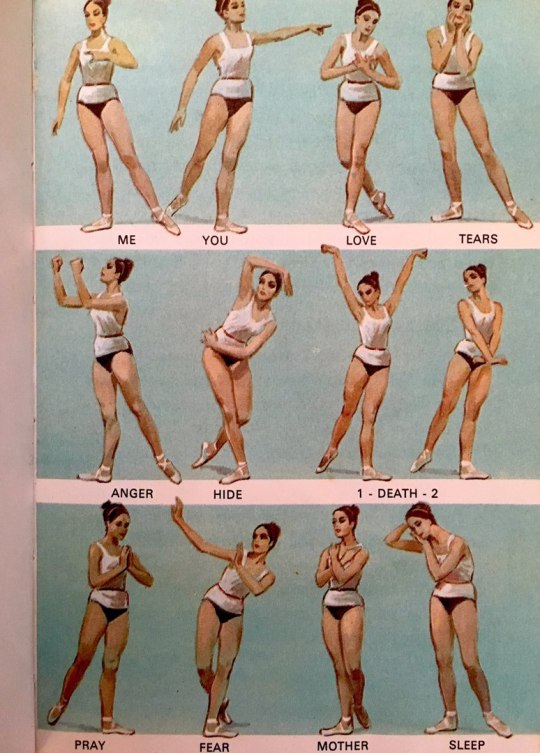
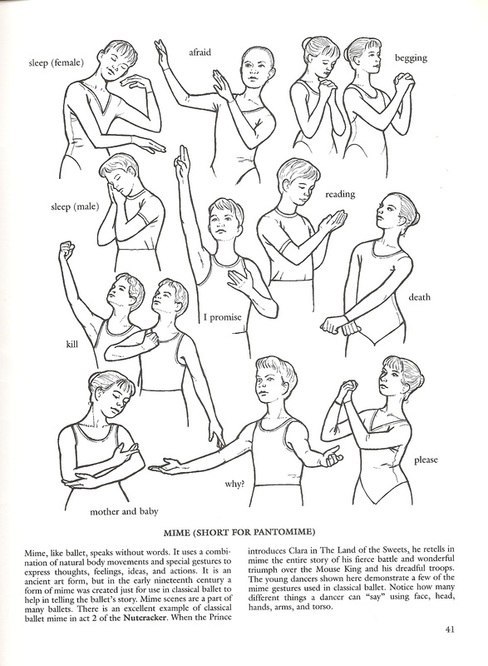
I stumbled upon this ballet mime guide the other day. It’s really neat. When I first started watching ballet, I really struggled to understand anything the dancers were “saying”. This would’ve been helpful back then.


 radiantanor.home.blog