According to Wookiepedia, members of the Jedi Council were elected by, well, the other members of the Jedi Council. In Legends, five members served for life. I’m guessing Yoda was one of these, which is super problematic considering just how long his life is. Four other members served open-ended terms with a chance at promotion to life-time when one of the five kicked it. The remaining three members were term-limited and were often brought on because they had specific types of expertise. I’m guessing Obi-Wan was one of these, promoted to the Council during the Clone Wars thanks to his skills at general-ing.
They rule over 10,000+ knights plus an unknown number of younglings, padawans, and service corpse members, but the Jedi Council is basically the board of a small art museum where everyone just nominates their friends and relatives. A number of councilors were nominated to the Council by their masters including Depa Billaba, Plo Koon, Ki-Adi-Mundi, while others were simply part of a siting councilor’s lineage, like Obi-Wan. Basically, if you’re just a rank-and-file Jedi from some random lineage, then you have almost no chance of ascending to power. You have even less of a chance if you have a known complaint with the Code or the Council’s interpretation of the same. No wonder Barriss felt like she had to blow something up just to be heard.
i need to
confirm the sources but i’m pretty sure Obi-Wan was got the rank of Master and
joined the Jedi Council right after the battle of Geonosis.
Btw, I loved
you pointed this out because the Jedi Council always gave me some serious
nepotism vibes.
It’s too much coincidence,
to be just coincidence. Of the 12 members, we have at least 6 linked to Yoda. In
An Order with more 10000 members, no one else, who was not directly linked to
Yoda, was good enough to be on the Council? Am I supposed to believe that?
Seriously! I call bullshit. The members were not elect on merit only, their
views HAD to be in line with Yoda’s (and his apprentices and, let’s be real,
yoda’s apprentices believes = yoda’s believes) for them to even be considered.
Qui-Gon: I shall do what I must, Obi-Wan. Obi-Wan: If you would just follow the code, you would be on the council.
It’s not about
selecting the “best” members. It’s about selecting a member who will help them maintain
the status quo.
The Jedi Council is the people in a room deciding what’s best for everyone, ready to give final say to one ‘wise’ leader when they don’t agree. Boy, that sounds familiar. Where have I heard of that system of government before? Hmmmm.
What’s really interesting to me is the aspect of dynasty within the Council. Jedi aren’t permitted to have families and, if they have biological children, they aren’t permitted to raise them so as to avoid attachment and nepotism, and yet, that’s exactly what happens with master-padawan lineage. It’s about as incestuous as all those medieval popes being succeeded by their ‘nephews.’ Yoda, a life-time member with an insanely long lifetime, basically has a stranglehold on the reigns of power which his ‘heirs’ may share but never actually inherit.
The more i
think about this the more frustrated I get. All the Order’s major issues, in
some way or another, come back to this. For them to evolve, they didn’t need a
radical chance like Anakin slaughtering everyone. All they needed to do was
open themselves to new opinions. It was that simple. If they had accepted new
ideas, debated them, learned from them, they would’ve been unstoppable. Something
to be truly respected and admired. They didn’t need a revolution. All they
needed to do was listen. This is what frustrates me so much about the council. If
they had done something as simple as listening to new ideas everything that
happened could’ve been avoided.
And as much
as I enjoy criticizing all the members of the council, I’m blaming this one on
Yoda and here’s why: the Jedi Order was capable of change. They changed their
rules a bunch of times to adapt to new situations, so change was possible. But how
many changes happened after Yoda took control? As far as I know, nothing significant
changed. If anything, his “rise to power” marked the decline of the Jedi Order.
Under his guidance, the Jedi kept themselves isolated and detached from the
rest of the galaxy, they grew more dependent on the Senate, we noticed the
first signs of nepotism in the High Council, they turned themselves into
soldiers, etc.
Yes, the
individual members of the Council are all responsible for what happened too but
we can’t deny the only thing they have in common is Yoda, and that says a lot. They
were all trained by him (at some point or another) and they all sought his
counsel when in doubt. That’s a lot of power over a lot of minds. And that’s
why I don’t by the idea that Yoda is wise or admirable. I’m not saying his sith
lord in disguise but I can’t call wise a being who lived for 900 years without
learning shit. I just can’t.
The saddest part is that the Jedi, or at least some Jedi, were aware of this. In the Kanan comics, Depa says that the reason she chose Caleb is because he questions the status quo and the Jedi are going to need people who do that if they have any hope of surviving in a changing universe. She firmly believes that they need some sort of avenue for peaceful dissent in order to stay a relevant force in the galaxy.
The sad truth is that the Jedi order has a Yoda problem. He trains all the younglings. Ahsoka later describes him as both wise and kind but he’s demonstrably neither. She, and every other Jedi youngling for 800+ years have simply been raised to think that. He also has the power to override anyone else in terms of decision making both because they’ve been raised to respect his ‘wisdom’ and because he has that authority as Grand Master of the Council. During AotC, he overrides Mace Windu, the Master of the Order, and makes him cover up the fact they have no clue where their mystery army came from.
So many of Yoda’s decisions are about maintaining or consolidating power, both for himself within the Order and the Order within the galaxy. He doesn’t want Anakin because the Chosen One might be a threat to his dominance. He doesn’t want to admit that the Jedi don’t know what’s going on during the Clone Wars, because he doesn’t want them to lose power within the Republic. In an episode of Rebels he admits that he acted out of fear and that all of his decisions leading up to and during the Clone Wars were based on his fear of change. It’s nice that he finally gained the wisdom and introspection to figure that out, but it was too little too late.
“a Yoda
problem”!! I love it. From now on all my meta will be tagged “the Yoda problem”!!!lol
Tbh, I never
bought the idea behind that scene in Rebels. I never believed had actually
learned anything from what happened. it’s the same problem I’ve with Yoda in
the ROTS novelization. Both have scenes with Yoda admitting he was wrong but he
changes nothing afterwards. He admits he acted out of fear, and years later he’s
back to pull the same shit that led to destruction of the Jedi order. It doesn’t
matter what he says because his actions don’t align with his beliefs. It’s like
Anakin saying he’ll bring peace to the galaxy right after he killed a bunch of
children. What comes out of his mouth doesn’t match his behavior.
I think at
some point Yoda mentions they were wrong to jump into the Clone wars. Okay, I agree.
He’s right. But then he’s absolutely okay with Luke turning into a soldier so
he can kill his own father. Where’s the wisdom in that?
What bothers
me the most about Yoda is that he had more time than any other character in the
franchise to learn from his mistakes but yet died preaching the same crap that
got all his students killed in brutal, violent ways. Not only that, he died in
his bed, peacefully. As if he had done well and accomplished his mission. Like a
hero resting after saving the day.
He never
took any responsibilities for 900 years of mistakes. There’s no wisdom or humility
in that. The very little he learned changed nothing. He died the same way he
lived.
I think part of the tragedy of Yoda and Obi-Wan in the OT, is that they knew they had fucked up somewhere, but they were never able to figure out WHERE they had fucked up.
So they died doing the same shit that got them in that position in the first place.
#for an order of empathic monks #they’re shockingly bad at self-reflection (tags by @grand-duc)
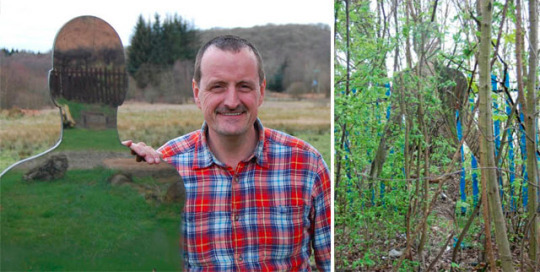
Scottish sculptor Rob Mulholland
creates creepy mirrored sculptures
out of acrylic glass that makes
them blend into their surroundings
until your perspective shifts and
they suddenly catch your eye. SourceSource 2
imagine getting lost in the woods and coming across these
on a scale of 1-10 how ready for death would you be
i didn’t know chaotic evil looked like someone’s dad from north dakota
Their father once said that in winter, they must protect one another, keep each other warm, share their strengths. So they shared their strength, and their crown as well.
Brandon, King of Winter ↳ King Brandon was King Robb’s true heir, and Lord Eddard’s before him. When the crown passed to him, it was he that bade his siblings share its responsibilities with him. Though some of the lords bannermen of House Stark thought this meant that Bran–a cripple since the age of seven–was weak, they soon learned the strength of the decision. A true king of winter, Brandon said, is one who prepares for winter, not just endures it. And the best way to prepare for winter was to make sure that all needs were being met, and thus that each was given the full attention of a member of his house. (It is also said that when there was strife in the North, King Brandon knew about it long before word officially reached Winterfell. He was blessed by the Old Gods, it was said, with magical sight and hearing, and understood the language of brooks and trees.)
Arya, Queen of Justice ↳ Queen Arya took it upon herself to protect the smallfolk. She had seen, she told her brothers and sister, their suffering and lived it during the War of the Five Kings, when Lannister and Stark warred in the riverlands. She had seen what evil men could do when left unchecked and found such evil intolerable in the lands of her blood. When justice was needed, it was Queen Arya who rode out from Winterfell. Though songs are sung of Queen Arya’s justice, it was known that her mercy was far more powerful. Justice, she had been known to say, was nothing without mercy–true mercy, the gift of mercy. Though far more celebrated for lives she took in the name of her house, her justice was not merely the enforcement of the law but the weighing of it. If she heard a man’s final words and thought he did not deserve to die, he did not die by her blade. (Though there were songs sung of Arya’s justice and her mercy, the more celebrated songs are ones of magic. The most creative of these songs are ones that say she wears the skin of a direwolf and heads a pack of thousands. Such songs are songs, however, and should never be misconstrued for fact.)
Jon, King of Peace ↳ King Jon was not a Stark, though when the doom of the world was nigh, the lords of the North crowned him king. He gave his crown to Brandon, Lord Eddard’s trueborn son, when the war ended, and King Brandon shared it with him in return, calling him brother though they shared neither father nor mother. King Jon fought for the living, and fought for peace, and though he was known as the king in the north who led armies in battle, he knew success by how infrequently he was called upon to fight. When Jon was home, the realm knew peace; when he rode forth, it would know peace again soon. (There were whispers that King Jon could not be killed for he had no beating heart inside his body. Any wound he took remained with him until the time of his passing. Such tales, however, could not possibly be true for what man can live without a heart? And while it is known that King Jon rode a dragon into battle at least once in defense of the North, that he had no heartbeat could not possibly be true.)
Sansa, Queen of Prosperity ↳ Queen Sansa learned coin from Lord Baelish, who helped her return to the North following a period of captivity in King’s Landing. If Lord Baelish was one of the more clever masters of coin that the realm had ever seen, under his tutelage, Queen Sansa came to know the power of gold and markets–vital to the recovery of the North following a long war and a longer winter. Queen Sansa knew when sternness was required, but the realm knew her to have a generous hand, and through her guidance the North came to know prosperity again. Artisans flocked to Winterfell, for Queen Sansa dearly loved music, and bakers competed in making the best lemon cakes for her. (Rumors plagued Queen Sansa for most of her days that Lord Baelish’s untimely demise–an illness that tore through him and slew him in his sleep–was wrought from poison she slipped into his glass of Arbor Gold. Rumors of poison have followed Queen Sansa ever since the death of Joffrey Baratheon, and thus cannot be trusted to hold any merit at all.)
Rickon, King of Reaping ↳ King Rickon was the youngest of his siblings, and barely more than a babe when his parents died. He lived his early days among the people, and in fear that Boltons or Greyjoys would find him and slay him in his sleep. Though many believed that he had died at Theon Greyjoy’s hands when the Prince of Salt and Rock took Winterfell, it soon became known that Greyjoy had slain two farmer’s boys and passed them off for the young princes of Winterfell. Though King Rickon was likely too young to remember such an event, he was known to mention it often in his work, for he turned himself to the reaping every autumn when the harvest moon rose, making sure that no farmer felt unable to tend to his fields, and that the North was prepared for the oncoming winter. (As with his brothers and sisters, there are flights of fancy that have entered the realm of myth for King Rickon as well. If Queen Arya headed a pack of a thousand wolves, it is said that King Rickon wore the skin of a great black wolf that would use his size and strength to protect the smallfolk from smaller packs who would set their eyes on livestock. Such tales are merely tales, though, for no man can wear the skin of a wolf.)




 radiantanor.home.blog