alystraea:

sumeriasmith:

Continuing to actually scan and post art I’ve been working on… 

Aman Dance Party #2: Fingolfin and Anaire. I tried something new with the underpainting this time, and it was astonishingly successful in getting the flowers to have the kind of glowing effect I wanted. My feeling is, if we poor mortal humans have managed to make glow in the dark plants, the Noldor can definitely have biolumenescent magnolias if they want.

Nolo, you will notice, unlike some brothers he could name but won’t, has actually dressed for a party. His taste in fashion is a bit more conservative than his wife’s though; I have a feeling the sleeveless thing is more On Trend, as it were. He wasn’t meant to be quite so blue, though– I have a general tendancy to try to not draw Feanor in all red or Fingolfin in all blue, because that feels cliche to me. My scanner, however, has a deep seated vendetta against the only real true purple marker I have, and often renders it kind of blue, which I always forget, so here we are.

I am all for glowing flowers in Aman.

evergreennightmare:

genquerdeer:

femmenietzsche:

dasha-is-bats:

ask-disneyka:

dasha-is-bats:

dasha-is-bats:

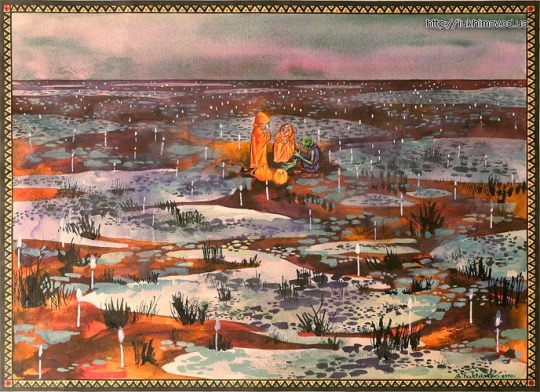
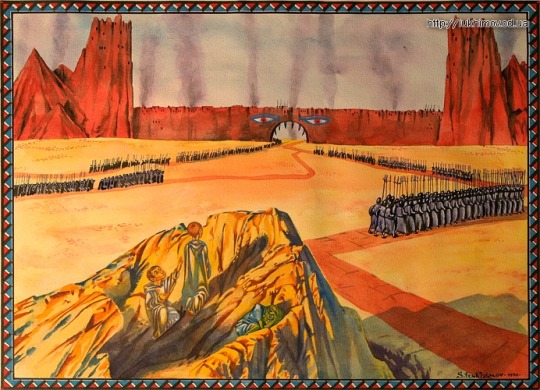
Have I ever shown you guys these weird late 80s Soviet Lord Of The Rings illustrations?

They were made by Sergei Iukhimov, who’s virtually unknown otherwise.

More from where that came from

Holy fuck this is absolutely perfect

I hated them as a kid, but I can appreciate them now.

Some more reasonably sized ones here:

LOTR art that actually looks like medieval illuminations? holy shit

@linguisticparadox !!!

How to Backup your Tumblr

fiction-is-not-reality:

I was just semi-complaining that I was still looking for a decent way to backup my +6k posts without having to use paid services or even just wordpress (which has an import from tumblr tool that asks for permission to access your blog and also make posts), when I decided to actually put some effort into my google search. 

Results were positive: I have successfully backed up my blog

*By which I mean: everything that I have ever posted
Not included: drafts, queue, likes, followers, following, comments, notes, chat. 

I followed this method (word by word), and now have a 450 MB folder on my computer with the name of my blog on it containing: 

1. Folder “Archive” (contains .html files listed by month)
2. Folder “Media” (contains gifs and images, mine has +1k files in it; might contain also audios but I have no way of confirming that because I’ve never reblogged an audio post from this blog)
3. Folder “Posts” (contains single .html files, each one a post; I have +4k files in it)
4. Folder “Theme” (contains only my avatar, but it might be a matter of if you have personalized themes or not)
5. .html file “Index” (by opening it it will give you the archive of your blog organized by month; clicking on a month will open up the archive for that month, and you’ll be able to read all the posts for that month as if you were on your blog**, except sans your theme graphic, with each page containing 50 posts)

**I can see gifs, links, embedded videos, tags, number of notes (but I can’t open up the notes, clearly), text is also correctly formatted. 

So yeah, in case anyone wants a very quick way to back up their blog, it took me less than 10 minutes. 

P.S. I didn’t have any issue, but to be on the safe side always check for spyware and virus threats before and after downloading anything. 

A Space of Their Own, a New Online Database, Will Feature Works by 600+ Overlooked Female Artists from the 15th-19th Centuries

rejectedprincesses:

“Many of the artists in the database were self-taught, barred from seeking formal training or studying anatomy on account of their gender. They could not hope to make a living from their talents when women were forbidden from issuing invoices.”

A Space of Their Own, a New Online Database, Will Feature Works by 600+ Overlooked Female Artists from the 15th-19th Centuries

vampireinvitations:

katy-l-wood:

katy-l-wood:

WHY DID NO ONE TELL ME ABOUT PRO WRITING AID BEFORE?! THIS THING IS FUCKING GLORIOUS. HOLY SHIT. LOOK AT THIS.

IT GIVES YOU A WHOLE DAMN REPORT ON YOUR WRITING AND WALKS YOU THROUGH HOW TO MAKE IT BETTER AND WHY IT IS SUGGESTING CHANGES. THIS IS JUST A TINY CHUNK OF THE HUGE REPORT IT GAVE ME ON THE FIRST CHAPTER OF ONE OF MY PROJECTS. I AM IN LOVE.

AND IT WORKS WITH SCRIVENER. AND IT IS AFFORDABLE.

WHY DID NO ONE TELL ME?!

Seriously, a couple hours with this and my first chapter is so much better. It helped me see problems I KNEW I had (passive voice, showing vs. telling, adverbs) but was having a hard time sussing out. It has made editing so much more fun and easy because now I know what the hell I’m doing and what to look for instead of stumbling around blind shouting “adverbs? adverbs?” like a town crier. I can already tell I’m getting better at seeing things without the program having to show me too.

I officially worship this thing.

it’s ProWritingAid in case anyone missed it

ciceqi:

littlepinkbeast:

jumpingjacktrash:

spaceshipoftheseus:

elucubrare:

here is a concept that I’m still trying to flesh out: medieval science fiction. 

not, of course, aliens land during the middle ages, though I’ve read and enjoyed that, but something much more difficult to execute, if it’s possible at all: space opera (exempli gratia) as written by Bede or Gildas or Geoffrey of Monmouth.  

The challenge is, of course, that you have to get into the medieval mind (ok, I know that talking about “the” medieval mind is fallacious) and figure out what they’d keep from their world and what they’d think to change – what is the analogue to ‘50s writers giving us faster than light travel & radioactive planets & psionics and still having gender and family politics that are identical to ‘50s middle class American politics? I have a feeling it’s the Church – it’s true that there are several books with Space Popes, but it tends to be a rebirth of the Papacy. I doubt a medieval science fiction writer would have the Church decline or even guess at the Reformation. 

Also, sci-fi tech tends to be, both aesthetically and functionally, an extension of tech the society it’s from already has – does a medieval space ship look like a siege tower? How do they envision the instant communication I’m sure they’d have to have as working? Would it be through magic (which is often the case in modern sci-fi)? 

And what would the spirit of it be? I would argue that, while you can’t really generalize over an entire field, and there is certainly some bleak sci-fi, the general tenor of American sci-fi is hopeful & enamored of the human spirit. Is the point of medieval space travel to find God*? Will leaving Earth leave behind Original Sin? Are we going to convert the Martians? 

DO they need instant communication? I mean, even star wars still has people carrying thumb drives around. There could be a pigeon analogue – sleek little machines flitting between the stars carrying messages, or perhaps creatures already native to the higher spheres suited to the task. Venusian swallowtails, mercurial spirits. 

I’d love to see the heavenly spheres as a setting for this all on its own, too. What’s the first moment a traveler hears the music like? 

I could see a lot of it through the lens of knights on impossible quests – why not ascend the sky? Knights riding on bright steeds of golden fire known as comets. Knights finding allegorical realms on the various planets, like the Kingdom of Love from Capellanus’ Treatise on The Arts of Courtly Love, but set in the golden mountains of Venus, and you could have a Kingdom of War and a Kingdom of Wit and a Kingdom of Time on Mercury and Mars and Saturn. Prester John could be from Jupiter! 

I’m not sure about the ways I would expect medieval scifi to be subversive, but I might look at Marie de France for ideas, she plays a lot with expectation and obligation and the implications of gender in her Lais, in very clever ways. 

medievals didn’t have the concept of vacuum, let alone know that space doesn’t have air. everything is open ships and space sails. gravity isn’t oriented to the planet, there’s a universal ‘down’. engines are driven by people or animals or wind or water, not burning fuel; your space chariot is pulled by cloud horses or sun lions.

other planets are not other earths, they’re allegorical locations populated by allegorical creatures. angels, demons, dreamers, cannibals, a planet of all women and a planet of all men – but not for 1950′s bikini shenanigans, more as a parable about how the sexes can’t get along without each other because men’s work and women’s work are both necessary. no concept that men could do women’s work and vice-versa, or at least do it competently. the men on the men’s planet would like, grow children in their fields, but wean them on burnt bread soaked in beer because they’re terrible at milking cows and kneading dough, or something like that.

there’s a Renaissance thing, Orlando Furioso, in which the knight Astolfo gets to the moon in Elijah’s burning chariot. (He goes to the moon because everything that has been lost on Earth can be found there, including Orlando’s sanity, because of course.)

I think I’d argue that theological allegory, like the Divine Comedy or the Vision of Piers Plowman, pretty much is medieval science fiction: speculations and warnings and encouragement, based on what is known-or-believed-to-be-known. As I understand it, the general opinion of medieval European scholars was that theology was THE most important thing to know about; studying the Creator more fervently than the creation was considered pretty much the same degree of Obviously Sensible as, say, studying birds doing bird things and being birds instead of just looking at empty nests and eggshells would be to us, like, why study mere side-effects when you can study The Entire Truth And Cause Of Everything? So I would argue that theology is the medieval version of twentieth century rocket science and atomic physics as The Coolest Thing To Know About, and thus spec fic based on it is the equivalent of science fiction.

You guys might enjoy a book I remember reading ages ago…Richard Garfinkle’s Celestial Matters.  I honestly can’t remember whether I liked it or not, but it’s basically “What if ancient astronomy was totally legit?  Okay, adventure time.”

And, going in the opposite direction, for a modern example of someone writing in the style of a medieval travelogue but as if it were true science, check out Umberto Eco’s Baudolino.  If you love history and sly wit, Eco’s your man.