whenever i see a baby in public i wish i were like a powerful faerie god mother character who could give the baby a gift like “you’ll never get a cold” or “math will always make sense to you” or something like bein’ great with string instruments but I don’t have any powers that I know of but it doesn’t stop me from trying so every time I see a baby in public I tell the adult with it “what a beautiful baby” and it makes them smile and then I pretend I can take the goodness of their smile and I look at the baby and I think very hard “you will have a good life, even if it’s hard, you will end up happy” and I’m just hopin’ the magic kicks in at some point
faerie: for your service, I will grant you one boon
The
Buddhist concept of “attachment” and “non-attachment” is
typically misunderstood. The Guru told Aang to let go of his
attachment to Katara. Aang interpreted it as “dump her” or stop
feeling anything for her. That’s not what non- attachment means at all. Non-
attachment is NOT being stone -cold aloof; it means to stop holding on so tightly, stop micro-managing, stop meddling and just trust. Trust the flow.
Trust the unfolding of events. Trust those you love to love you back.
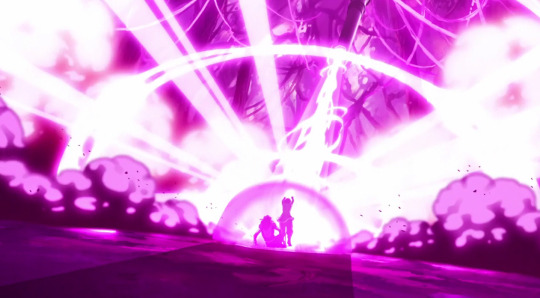
Aang could not defeat the Phoenix King if his mind was on Katara.
He could not (should not) fight her battles for her. He had to
focus on what he needed to do and Katara was quite capable of taking
care of herself. That is what the Guru meant by “letting go”
of Katara.
Attachment in the Buddhist context is like: trying to hold water in your hands
by making a tight fist. You hold on so tightly the water squeezed
right out leaving you empty handed and slightly damp. People do
this to the ones they love. They try to “hold on” so tightly the
other person starts to hate them.
Korra’s
journey to non- attachment was not the same as Aang’s. Korra was more
attached to her label as Avatar or her idea of what she
should beas the Avatar. She had little to no problem
trusting her friends and loved ones to handle themselves in battle.
Her challenge was letting go to this identity she had created for
herself long ago and instead embracing who she really was. Many of us
get stuck in labels applied to us, expectations put upon us,
traditions and cultural norms taught to us that we never find out who
we really are and what we are really capable of. Book Four
Korra had been holding on so tightly the “old her” to what had
happened to the “old her” that she could not heal and move
forward. Korra had to let go of her- self: her fears,
insecurities, old labels and other attachments to
step in front of a spirit weapon of that magnitude and just trust that she could stop it.
“Attachment”
may not be the best English word to translate the concept from the
original language…..but still I like that both the shows bring up
these concepts. Its a good introduction. If you want more I recommend
the American Buddhist Writer Brad Warner translating Dogen Buddhism
for the Modern Western audience.
Heyo! This is a masterlist that I’ve compiled to help my fellow Tolkien writers/creators. A lot of us have done a lot of research to create our settings, and I wanted to put all the awesome resources I’ve found over the years into one place. Voila~
I’m always excited to see new things that might be useful for writers working within Tolkien’s setting. Let me know if you spot something useful!
This is amazing! Thanks so much for compiling, @heckofabecca!





 radiantanor.home.blog