Number five seemed to be the most popular, so here’s a snippet from that:
This is not the throne room in Tirion.
Or, rather, it is, but it’s the throne room as he remembers it, not the throne room he was recently shown after his release from the halls of Mandos. Fingolfin can’t help but relax a bit. It’s a dream or a vision of some sort, surely, but it’s a comforting one.
He smiles at the faces he sees around him. Some of them are still in Mandos. Some he has hesitated to speak to. But now here they all are, disturbed by whatever politics are current today, but blissfully safe.
And there is his father, on the throne.
Fingolfin’s breath catches.
The familiar words, the words that have haunted his dreams, roll down. The issue at hand: Feanor’s desire to leave Valinor and his words against the Valar.
Fingolfin knows his part. He knows what he is supposed to say. He is supposed to call for the restraining of Feanor and to disparage Feanor’s loyalty to their father. He is supposed to drive in the final wedge. He has had this dream before.
He waits a moment for the words to come forth against his will, but nothing happens. His father’s eyes merely remain fixed on him.
Fingolfin has many words he would say to his brother – yes, brother – and more than a few might be unkind, but he has to admit that his long ago remark had been unjust. Feanor’s loyalty to the Valar is questionable at best, but having seen him grieve their father, there can be no doubt about Feanor’s honor and loyalty to him.
He had wondered, on the Ice, what might have happened if he hadn’t said those words. If he had offered any other, lesser, insult. If he had kept his own counsel. If, if, if.
So he says instead, “I have heard much rumor about my brother’s views on these matters, but I confess that we have not spoken plainly of the matter face to face. I would be sure I know his views fully before I respond to them.”
And then Feanor strides in, dressed for war, or at least the closest approximation Aman raised elves could imagine.
The fire of his brother’s words is nearly irresistible, but Fingolfin does his best to resist anyway. He can only afford to lend half his attention to Feanor’s words. The rest he must devote to figuring out how he will respond.
If this is a dream or a vision, it might not matter, but –
He can feel his bond to his wife, as of yet unstrained. He can feel the power of Feanor’s words as an almost physical force. He can see a crack in the floor that he does not think he ever noticed before.
It occurs to him that this might not be a dream, and if there is any chance it is not, then it matters.
I love it ❤ Feanor’s goals are so cute… That was unexpected. But Feanor having way less problems with adapting his old life fits quite well. On the other hand he only lived a few weeks in Beleriand – so he may never got used to the Sindarin names?
Hitting Fingolfin back would indeed endanger all his plans. With all of his Family and the Silmaril beeing in Tirion (not in Formenos) they would be far safer. I doubt Morgoth would fight the Valar directly.
I would love to hear what they do to prevent all that shit that had happened without loosing their yet unborn family members (as Fingolfin asks himself)!
(Fingon calls Feanor ‘Uncle Feanor’ – not ‘Uncle Feanaro’. is he a time-traveller too?)
*smacks forehead*
No, that was just a typo on my part. I’m so used to typing Feanor that I didn’t catch that.
I’m glad you liked it! Not sure yet if I’m going to continue it.
So apparently I am going to continue this!
Although after this update, you might wish I hadn’t.
Fingolfin’s explanation doesn’t end up explaining much at all, so Fingon ends up drawing his own conclusions. Given the circumstances, those conclusions cause enough concern that he goes to Maedhros, who goes to his brothers, and soon the rumor mill in the city is fairly certain that Fingolfin and Feanor, tentative allies, are now at each other’s throats again.
“Relax,” Feanor tells him. They’re meeting in Feanor’s office this time, and Fingolfin is pretty sure some of his nephews are lurking protectively outside the door. “The Valar aren’t going to exile you over a few punches.”
“And if they do?” Fingolfin says wearily from his seat.
Feanor shrugs, still pacing restlessly. “Then events are one step closer to being back on track, and we’ll have a better idea what will happen next.”
Fingolfin stares at him for a long moment. “I hate you,” he said flatly.
“I know,” Feanor says with far too much cheer. “Which reminds me.” He goes to the elaborate safe in the wall and after a moment of visible hesitance wrenches the already slightly ajar door open. The light of the Silmarils gleams forth.
Feanor dumps them in a bag that somehow manages to hide that light and then turns and holds them out expectantly towards Fingolfin.
Fingolfin had thought he had seen Feanor desperate last time. It is nothing compared to Feanor now.
He had thought to find his brother stirring up the people. Instead, he finds him outside Celegorm’s sick room, drawing up plans to depart immediately.
“We’re not ready yet,” he protests immediately. “It takes time to prepare an army, Celegorm’s not even fully healed yet – “
Feanor slams him against the wall. “Time. What time do you imagine we have?” he snarls. “With two hands you promised but with one hand you gave. Do you think I never saw that part of the tapestry in all my long years in Mandos?”
Suddenly Feanor’s grip is the only thing keeping him upright. “Ungoliant,” he breathes.
There are now more than 90 people dead. You can bitch and whine that’s it’s hotter where you are, but you have to understand that it’s the elderly, homeless and small children who don’t have air conditioning and are susceptible to health problems. How fucking despicable can you be to just laugh at people dying because temperatures are hotter where you are. Our infrastructure was built to withstand -30 C°, not the heat. It’s not about how Canadians are “weak”, it’s literally just shitty circumstances.
Not to mention that people who are accustomed to cold climates have a physically more difficult time coping with temperatures that their bodies aren’t used to. Also a lot of people who have never had to cope with hotter temperatures aren’t as familiar with heat exhaustion or heat stroke, don’t know how to manage the heat safely , etc!
That last point.
Denmark is currently in its hottest summer ever recorded, and the number of people I’ve talked to who have only now discovered what a heat stroke is amazes me, because I grew up in the South of France where summers are hot as fuck every year – my brother-in-law went out for a bike ride without a hat and with a half a liter of water for three hours and came back and was sick because of it.
The idea that he’d get sick because of the sun didn’t even OCCUR to him, because in his 30+ years on this green ball swirling through space, it’s never been an issue for him.
In the South of France, most cafés have mist sprayers and all shops / malls are air-conditioned. In Denmark, most cafés do NOT have mist sprayers (but heat lights!) and the shops are not always air-conditioned.
Most of the warehouses have been out of portable air-conditioners and fans on an off since May because people are hot and have no air-condition installed. The buildings are built to keep heat IN. Not out.
No air con, buildings designed to keep heat in, not even ceiling fans, no drinking fountains, windows that don’t open in buildings, and we expect people to work in those buildings, in their full uniform which has no ‘hot weather’ option – I mean what employer is going to provide short sleeves and shorts for that one week every three years where it gets above 25/80 degrees? – windows that don’t open on public transport, and often no shade while waiting for said public transport, we have heaters and insulation and draft excluders, we buy black cars and dark clothes, we buy sunscreen for our holidays in Spain, then forget where we put it, when we find it and apply it we sweat it off again because we’re not used to the heat, we walk places rather than drive and even if we drove, our cars don’t have proper air con and we don’t have covered parking, school playgrounds and public parks have no shade, people don’t have pools so kids play out all summer in the heat. We don’t have ‘American style’ large fridges or freezers with ice makers and they break down when competing with hotter than usual ambient temperature, most of us don’t even own cool boxes – or if we do it’s at the back of the shed full of spiders.
So yes, we have to be told it’s going to be hot. And we have to be warned to check our elderly neighbours and to help them take the blankets off their bed or to swap to a summer duvet, to suggest they have a cold drink instead of a pot of tea and take off their cardigan.
Because we only know people who got sunstroke on their holidays abroad.
And we have never in our lives known anyone who died from the heat.
To anybody who thinks it’s funny when people die, you can go fuck off a tall bridge.
I live in Phoenix. It’s going to be 115F/46C degrees today. This is nothing unusual for this time of year. And yet every year we lose people to the heat. I can’t imagine what super temps must be like when you are not used to it. England, Quebec, and most of Europe’s home were designed to keep heat in. Not let it out. So instead of giggling like evil children over someone else’s horror, try being a little more understanding at the very least of what they are going through.
Seriously.
Even here in the Midwest, we have drives every year to distribute fans, water, and air conditioners to vulnerable people, and a few people die anyway.
And we have the infrastructure to cope and are used to it! And even then! For people vulnerable to it and people who push themselves too hard without taking time to drink fluids and cool down it is still! Dangerous!
Young and elderly are the most common victims because they have physical limitations to their ability to sense overheating or combat it. Children don’t have fully formed sweat glands, produce more heat during movement, and their smaller body mass means they dehydrate faster. The elderly have limited mobility and diminished autonomic reflexes, so they’re less likely to sense thirst or hunger. Especially keep an eye on people with heart or vascular conditions – dehydration will necessarily lead to a drop in blood-water volume, which can cause spikes in blood pressure and heart rate. People with clotting disorders or vascular stenosis can have circulatory issues resulting from increased blood viscosity. People with respiratory conditions are also at risk if the air is severely humid because moisture in decreases oxygen intake per breath. If possible, you really want to keep these groups in areas that are dry, cool, and hydrated.
Avoid drinking excessive caffeine and alcoholic products. These contain diuretics that will increase water loss. Make sure you wear sunscreen when out – a sunburn will, of course, increase dehydration and body temperature. Try to avoid being in direct sunlight extensively between the hours of 10a.m.-4p.m., particularly on days with intense highs and significant humidity. If you jog/run outside, do it outside of peak hours when temperatures are dropping. People who do manual labor really need to be careful here. Industries like construction and landscaping need to making sure their employees are taking regular breaks and drinking consistently throughout the day. They may also want to supplement with Gatorade or other electrolyte improved drinks if you’re sweating a lot.
Key symptoms you want to watch out for are dizziness, exhaustion, dry mouth, vomiting/nausea, and headache. If your urine is very dark (or nonexistent) or if you can’t muster up enough saliva to spit, you’re badly dehydrated and need to drink something. If you see somebody pass out, immediately check their heart rate – rapid, weak pulse is a sign of danger. If they lose consciousness for any significant period of time (more than a second or two), contact an ambulance immediately or take them to the hospital. If their skin feels hot or they have a fever over 100F, get them to a cool spot if possible. A bathtub filled with cold water or ice can help bring down over all body temperature while waiting for paramedics to arrive. Otherwise, damp rags or even taking off some clothing layers may help.
Big Horses are a Very New Thing and they Likely Didn’t Exist in your Historical and/or Fantasy Settings.
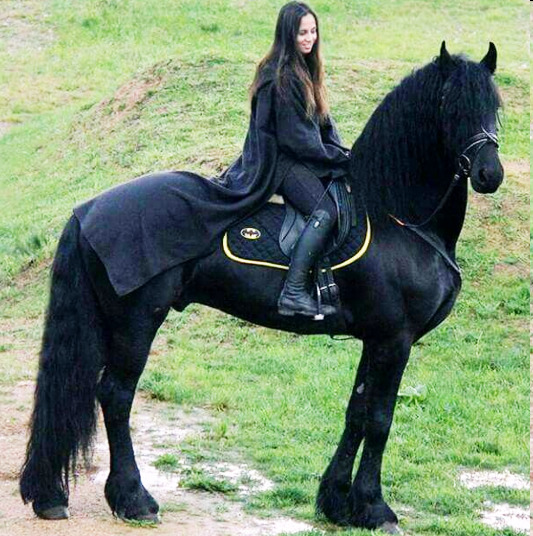
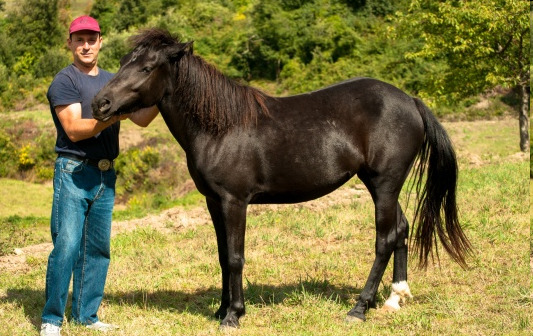
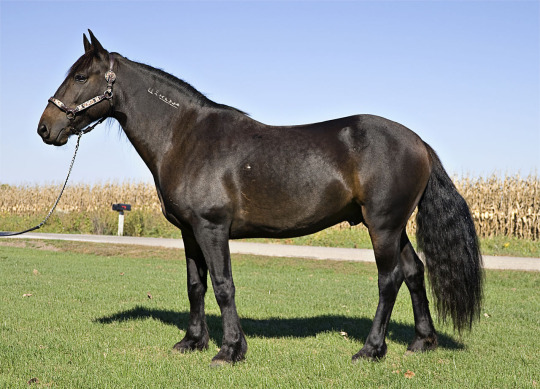
You’ve all seen it in every historical piece of media ever produced. Contrary to popular belief, a big black horse with long legs and long flowing mane is not a widespread or even a particularly old type of horse.
THIS IS NOT A MEDIEVAL THING. THIS IS NOT EVEN A BAROQUE THING. THIS IS A NINETEENTH CENTURY CITY CARRIAGE HORSE.
All the love to fancy Friesian horses, but your Roman general or Medieval country heroine just really couldn’t, wouldn’t, and for the sake of my mental health shouldn’t have ridden one either.
Big warmblood horses are a Western European and British invention that started popping up somewhere around 1700s when agriculture and warfare changed, and when rich folks wanted Bigger Faster Stronger Thinner race horses. The modern warmblood and the big continental draught both had their first real rise to fame in the 1800s when people started driving Fancy Carriages everywhere, and having the Fanciest Carriage started to mean having the Tallest and Thinnest Horses in the town.
Before mechanised weaponry and heavy artillery all horses used to be small and hardy easy-feeders. Kinda like a donkey but easier to steer and with a back that’s not as nasty and straight to sit on.
SOME REAL MEDIEVAL, ROMAN, OTTOMAN, MONGOL, VIKING, GREEK and WHATEVER HISTORICALLY PLAUSIBLE HORSES FOR YOU:
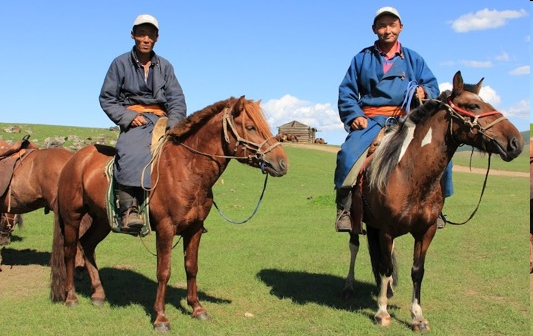
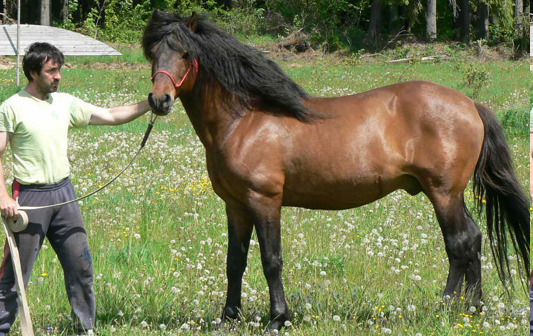
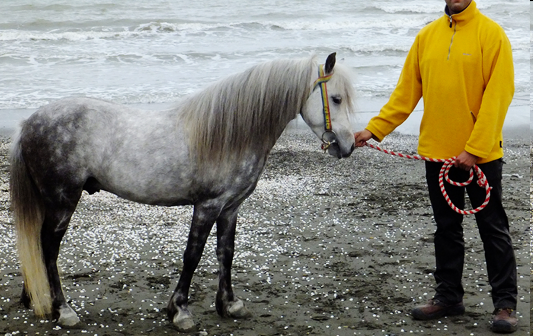
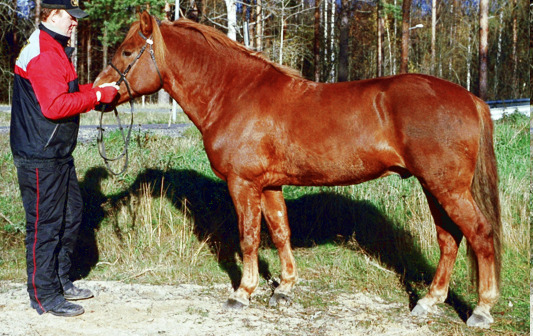
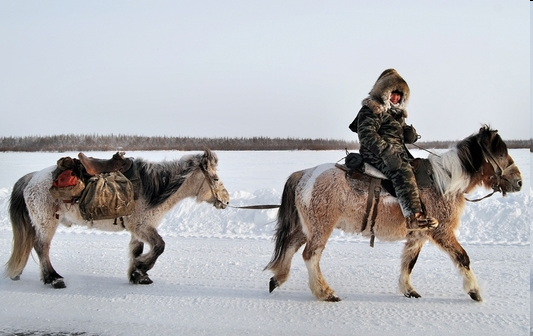
“Primitive”, native breeds all over the globe tend to be only roughly 120-140 cm (12.0 – 13.3 hh) tall at the withers. They all also look a little something like this:
Mongolian native horse (Around 120-130 at the withers, and decendants of the first ever domesticated horses from central Asia. Still virtually unchanged from Chinggis Khan’s cavalry, ancestor to many Chinese, Japanese and Indian horses, and bred for speed racing and surviving outdoors without the help of humans.)
Carpathian native horse / Romanian and Polish Hucul Pony (Around 120-150 at the withers, first mentioned in writing during the 400s as wild mountain ponies, depicted before that in Trajanian Roman sculptures, used by the Austro-Hungarian cavalry in the 19th century)
Middle-Eastern native horse / Caspian Pony (Around 100-130 at the withers, ancestor of the Iranian Asil horse and its decendants, including the famous Arabian and Barb horses, likely been around since Darius I the Great, 5th century BC, and old Persian kings are often depicted riding these midgets)
Baltic Sea native horse / Icelandic, Finnish, Estonian, Gotland and Nordland horses (Around 120-150 at the withers, descendant of Mongolian horses, used by viking traders in 700-900 AD and taken to Iceland. Later used by the Swedish cavalry in the 30 years war and by the Finnish army in the Second World War, nowadays harness racing and draught horses)
Siberian native horse / Yakutian pony (Around 120-140 at the withers, related to Baltic and Mongolian horses and at least as old, as well-adapted to Siberian climate as woolly mammoths once were, the hairiest horse there is, used in draught work and herding)
Mediterranean native horse / Skyros pony, Sardinian Giara, Monterufolino (Around 100-140 at the Withers, used and bred by ancient Greeks for cavalry use, influenced by African and Eastern breeds, further had its own influence on Celtic breeds via Roman Empire, still used by park ranger officers in Italy)
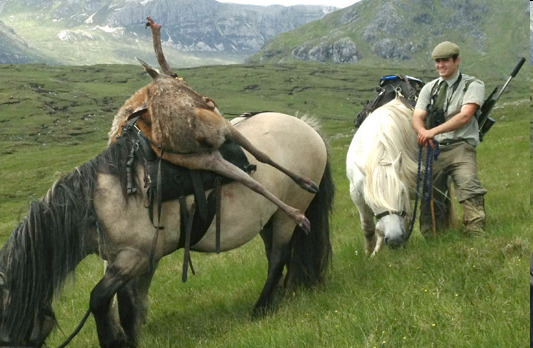
British Isles’ native horse / various “Mountain & Moorland” pony breeds (Around 100-150 at the withers, brought over and mixed by Celts, Romans and Vikings, base for almost every modern sport pony and the deserving main pony of all your British Medieval settings. Some populations still live as feral herds in the British countryside, used as war mounts, draught horses, mine pit ponies, hunting help and race horses)
So hey, now you know!
I love this so much – and now I know why Tall Lanky Thin horses have a terryfying vibe to them, and the “primitive” native pony-like breeds awake in me only hope and trust.
such valid historical finger-eaters here
Okay, so, you got me, I’m a horse person. I used to take riding lessons and would read tons of books about horses as a kid and teenager. You could definitely say I was that weird horse girl, and I really have to say even though this is really informative about the native types of equines in the general European and Middle Eastern areas how FULL OF BS THIS POST IS, SO BUCKLE UP BUTTER CUPS YOU ALL ARE GONNA DO A LEARN TODAY.
So what OP said about the Roman General not riding a Middle Ages war horse is actually correct and here’s why: The Western Roman Empire fell BEFORE THE MIDDLE AGES BEGAN AND IS WHAT TRIGGERED THE BEGINNING OF THE MIDDLE AGES IN THE GODDAMN FIRST PLACE. And for those of you who aren’t aware, the Middle Ages was roughly a 1000 year period that consisted of the 5th through the 15th Century; aka. 400AD-1400AD, and ended with the beginning of the Renaissance. (x, x)
First off, NONE OF THOSE ARE HORSES. THOSE ARE PONIES. You cannot ride ponies into battle while dressed in a full suit of armor because their legs would buckle out from underneath them because they simple aren’t large enough or strong enough o be able to carry the weight of a knight in plate armor. Hence the term WARHORSE. OP literally names off a bunch of PONY breeds, and while ponies were used commonly back then as cart and pack animals, they were not used in battle and thus would be bad steeds for fantasy and historical fictional characters that planned on doing any sort of fighting.
Secondly, the Fresian horse breed certainly WAS around during the Middle Ages because it originated in the Netherlands before the 4th Century and is literally known as the ‘Knight’s Breed’ because their size, strength, and stamina that allowed them to be able to carry the extra weight of a knight, his armor, and the armor the horse would be wearing as well. (x)
AND LASTLY, I’M GONNA HELP OUT ALL MY WRITER FRIENDS BY WRITING UP WHAT MIDDLE AGE WAR HORSES ACTUALLY WERE NAMED, THEIR USES, AND WHAT THEY MIGHT HAVE LOOKED SOMETHING LIKE.
Oh thank god someone wrote the post so I didn’t have to because the original post just had me all what the actual fuck are you smoking.
OH THANK GOD I had that reaction to the original post but was too tired to go hunt shit up because yeeeeahaha fuck no. Also bless @jltillary for the super useful all-in-one-place link.
Also: where are the mentions of changes in human height and size over time? I mean, horse sizes have also changed, but not as dramatically as humans.
Note that the OP is completely fucking right about horses historically being smaller than we think of them today, just for the record–horses have grown dramatically in size, in part because so have humans and in part because increasing agricultural output and wealth during the eighteenth and nineteeth centuries encouraged the specific development of very large, heavy draft horses to perform certain industrial tasks before being replaced with machines in the early to mid twentieth century. I do, however, agree that the specific choices they’ve displayed are… not particularly historic, since they’ve predominantly chosen modern pony breeds without necessarily considering the modern context of those animals, either. Or, frankly, the size of what it means to be a pony. 120cm to 130cm is just too damn small; we’re mostly looking from numerous Roman and medieval sources at a range closer to 138-153cm for most of European history, and only the means within that range seem to really change. For context, that is the size of your average Quarter Horse population if you aren’t constantly crossing them on real tall, gangly Thoroughbreds. It’s a very mid-range horse size.
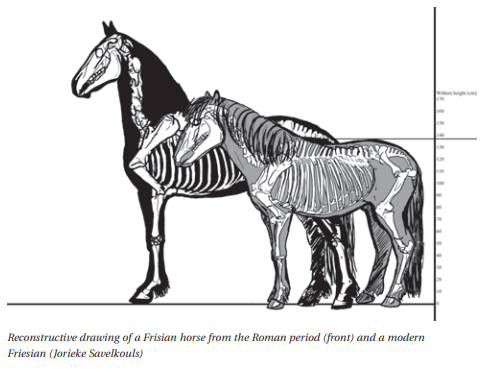
For context, these Roman horses ranged from 13.1 hands up to 15.3 hands, with an average size of about 14 hands. Here’s an image of a Roman-era Frisian horse against a modern-day Friesian, taken from a paper on Friesian history I’ve cited below:
(Frisian horses did increase in size between the small Roman animal pictured in front and the modern animals, it is true–but throughout medieval Europe, even in Frisia the average equine size continued to range about 13.3 to 15.3 hands or 140-150cm at the withers. Not remotely the size of a modern Friesian! Although this is not the size of the small ponies mentioned by the OP, either.)
I gotta say LOL wtf at the Lipizzaner under “coursers,” though–they’re warhorses, that’s the point of airs under saddle. They’re built for collection first, strength second, and speed as a distant third. There’s an inherent tradeoff between speed and collection–you can think of that like balance or agility–and in a warhorse, you want to have collection before speed so you can turn quickly and pivot away from a foot soldier or encourage your horse to body slam someone, etc. You also want the poise to pull off, say, leaping up into the air and slamming your hind legs back to kick someone in the head. Lipizzaners are aaaalll about balance and centre of gravity, and it shows in a few notable points of their conformation.
More on that below.
In general, the courser lists don’t appear to really understand what these breeds specialize in any more than the list of ponies does. You’ve got the Arabians–who genuinely are animals I’d call coursers, being typically specialized for long-distance endurance, except that the specific animal pictured is an Egyptian Arabian typically specialized for having pretty heads and trotting around with a flat top like a conformation dog, not so much the current lines of performance Arabians preferred for endurance work which are built a little differently. (Akhal Tekes also fall into this category legitimately, to be fair.)
You have the Lipizzaner, which as I said is not built for speed or particularly endurance. And then you have a Fjord, which is an all-around type breed–I’d actually put them right next to the Haflingers in terms of body type, conformation, and ability. They’re best, if anything, for strength, not really speed.
I would actually put the Lipizzaner as the quintessential modern example of a destrier. Destriers genuinely weren’t as big as people seem to think, and the modern Percheron and Friesian may have roots in old destrier lines but both breeds have inarguably changed since–the Percheron specialized as a heavy draft horse and the Friesian as a carriage horse, and both are now changing again as people breed either with an eye to riding or, in the case of Percherons, as four-in-hand driving show specialists. The Shire? LOL, no. The progenitor of what we today call the Shire is the Old English Black, which spent considerable time as a carthorse being selected for that skill and everything that comes with that. Gypsy Vanners are similarly descended from British cobs, which means that these are the descendants of animals who have been selected primarily as… small carthorses and draft horses. Very similarly, I should add, to the Haflinger listed above! (The Morgan also, but to a much, much more limited extent. Morgans have always been very multipurpose horses.)
Look, even if these carthorse and carriage breeds are descended from warhorses and warhorse lines, which I do actually find quite possible… they had a good 350 years past the point when anyone was really engaging in medieval-style warhorse combat for these horses to live on, and you don’t keep horse breeds around just out of historical interest! Horses are bloody expensive, and all breeds and lines of animals change over time to suit current tastes and, more importantly, current uses. No one wants to breed Percherons that are medieval-accurate destriers, eating their fool heads off, when good logging drafts are in high demand. So choosing modern animals to represent medieval specialists is a matter of thinking about the demands of given medieval equine jobs and thinking about the conformation and temperament that fulfill those jobs today. If you’re attached to the notion that Friesians are living replicas of the warhorse from the 1300s, I invite you to consider this much more thorough dissertation of the history of the modern Friesian by a scholar of the breed.
(I see the same thing happen when people want to talk about modern dog breeds in history. Look, I’m sorry, but your fat-ass English Mastiff without enough muzzle to breathe properly and a nose with no holes in it is not the same thing as the war mastiffs the Spanish used to rip the shit out of indigenous people. It’s just not. Most modern dog breeds have been exaggerated to conform to modern sensibilities and modern needs, and as such they don’t bear much resemblance even to their ancestors a century ago, let alone types of dogs kept by medieval people who were actually using dogs to do a job. But it’s very tempting to trace breed lineages back into the misty, romantic edges of yore, so… that’s apparently what we’re doing.)
So okay. Here’s the animals I would pick as showpoints, if I was going to pick a list of modern horse breeds to represent medieval types. I’m making efforts to pick photos that let you get a little bit of a better look at the side of a horse so you can see what kinds of structure we’re talking here. After all, in medieval Europe these horses would be purpose bred, not pedigreed, so structure would effectively have defined them.
Rouncey
I’m not bothering with the rouncey, because frankly basically any basic hack qualifies; QHs are actually specialized for different things, notably short-distance speed, but frankly they’re so common that you wind up with more or less the same effect. If you’re not particularly any one thing, you count as a rouncey. Here’s a mustang, if you want an image. The mean of medieval and early post-medieval horses does seem to have been about 14 hands: technically pony sized, but not necessarily the small ponies that the OP demonstrated. Fortunately, that is also the size of your average mustang, give or take a couple of inches.
Courser
Here’s a modern horse that I think would resemble a quite good courser. This is an endurance-bred Arabian with plenty of experience. Note that he is built perfectly level, with relatively light legs (though still with plenty of bone for durability). His neck isn’t too long, unlike the Egyptian Arabian pictured above, which means that he isn’t unbalanced and won’t find it hard to manage his breathing. He has a deep, deep chest–look at how far down his leg it moves past his elbow–which gives him plenty of room for big lungs and heart, allowing him better respiratory efficiency. Note that he does not have particularly powerful hindquarters. For an endurance horse, you don’t need them–it’s more important to have slow-twitch musculature that can keep going efficiently, and the more evenly the horse is built (that is, the closer its back is to being parallel with the ground), the more efficiently all motion is converted to forward motion. This horse is never going to win a sprint race against a Quarter Horse, but he will be fast across distance and would have been much prized by anyone who routinely needed to send messengers on horseback.
Palfrey
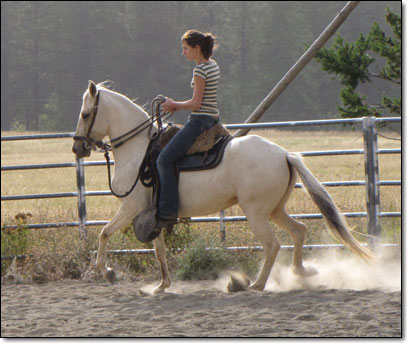
This medieval type wasn’t mentioned, but I happen to like it–especially since I’m used to the modern representatives of the type being rather overlooked, especially in this context. A palfrey refers to what we would today call a gaited horse, which is particularly comfortable to ride, especially over long distances. (They are also reasonably popular in endurance riding for this reason, although they are not as fast.) This is a Paso Fino mare, chosen because they are reasonably middle-sized and also because they are a Spanish breed, which squares with the tendency to refer to palfreys as similar to or synonymous with jennets, often from Iberia. It’s not easy to identify a gaited horse from a still side shot, so here’s what a gait looks like.
Destrier
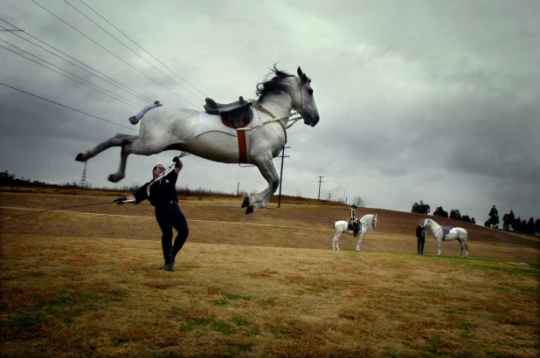
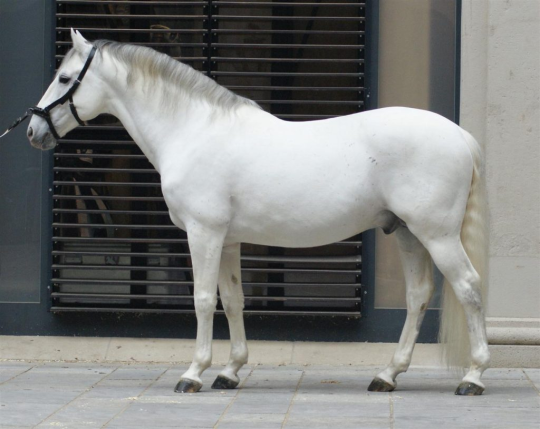
I did say I intended to make a case for Lipizzaners as the prototype medieval destrier, didn’t I? This is a stallion on loan from the Piber stud. So. Let’s point out that Lipizzaners are probably the only line of animals still bred (via the stud at Piber) to perform airs under saddle; while these are framed as being for the betterment of the horse’s riding ability, it is perhaps instructive to consider who first thought training a horse to rear up on its hind legs in a controlled fashion and hop forward with forelimbs raised or to leap through the air and kick as he comes down was a wise idea, and why someone might have thought this at all. It is also worth noting that the Spanish riding style from which dressage comes from is primarily used today in bullfighting, whereupon it becomes immediately evident why you’d want a balanced horse who can immediately shift back on his hindquarters and move in any direction very quickly.
What I want you to notice about this stallion is that he is not very large–Lipizzaners range from about 14.2 to 15.2 hands–but man, is he compact. He has a short back, a strongly muscled loin, a wide, powerful hip, and a thick, flexible neck. (Lipizanners often startle horse people for looking less like the glamorous Amazons we automatically expect expect and more like chunky, short little fat-necked white blobs; the shorter neck is actually helpful for balance and collection as long as it is flexible.). He also has good depth through the heart girth and while his legs are not particularly long, they are well boned. He is built slightly uphill if you draw a line from the point of his hips to the point of his withers. This is a horse built for agility and flexibility, but not necessarily speed. He is relatively strong for his size–this is a horse who will carry a much heavier rider relative to his height than a longer-backed, and who won’t experience a lot of exertion doing it. And his size is the size we most often find in zooarcheological digs of European medieval military horses.
My friends, this short fat little white pony is probably the most authentic warhorse you’re going to see any time soon. He’ll eat less than any Shire, too, and be much easier to turn and move quickly on the field–particularly given that medieval armor was a lot lighter than the same Victorians creating horses of sizes never seen in recent years liked to imagine.
I have realized that Steve Rogers would have gone into the ice after The Hobbit was printed but before The Lord of the Rings was released and now all I want is him finding out about The Lord of the Rings and being so excited because “Wait, you mean there’s a sequel?!”
please please please just imagine the following:
Steve reads The Hobbit in the 30s/40s. Maybe Bucky saves up and buys it for him one year for his birthday. Maybe he picks up a copy while on the USO tour. Maybe Peggy lends it to him.
He reads it. He loves it. He goes into the ice.
He wakes up and rereading it crosses his mind but “It’s an old book now, no one’s probably heard of it.” and there are so many new things to read that it gets pushed aside.
(Or maybe he knows that they’re making The Hobbit into a movie and he’s so happy about that but he doesn’t really read into it, you know? It’s going to be a movie, that’s good enough for him. He doesn’t watch interviews, he doesn’t read articles- he hears about The Lord of the Rings, of course, but no one ever makes the connection for him.)
(“I’ll reread The Hobbit before the movies come out,” but there’s still so many new things that it still gets pushed aside.)
Someone (Nat or Sam, in a hotel somewhere while they’re looking for Bucky, or Bruce in the Tower, or whoever) flips through channels and puts on The Lord of the Rings movies and Steve is only half paying attention. Maybe he’s sketching. Maybe he’s reading reports. Who knows.
Then he hears “hobbits” and it catches his attention because wait, is that…? But this isn’t The Hobbit, he doesn’t know this story, but he’s invested now and he’s watching a little bit more.
Gandalf appears, and Bilbo, and wait he definitely knows these characters what’s going on, what’s happening here, what story is this?
“Well, yeah, it’s The Lord of the Rings, it’s the sequel to The Hobbit-”
“He wrote a sequel? There’s a sequel!?”
“…there’s technically a prequel too, mostly put together by his son, but-”
“HOW MANY MORE BOOKS ARE THERE?”
“…three in The Lord of the Rings, plus the Silmarillion, and a lot of history/meta stuff too…”
“I WANT TO READ THEM ALL.”
Steve does read them all.
(There’s a moment of loud indignation when he reads about the riddle game because “It didn’t happen like that!” He has to have the changes explained, and then it’s the funniest thing in the world to him.)
Please just imagine Steve Rogers in his office at the compound with a tiny book shelf that’s just full of copies of all of Tolkien’s works. And tucked in a corner is a first-edition copy of The Hobbit that Tony bought for him, and Steve knows that it has to be ridiculously expensive but he dosen’t care, because it’s almost exactly like the copy he used to have. And even though he knows he probably shouldn’t handle it too much, sometimes he picks it up and rereads the riddle game scene. (The original is still better, in his opinion.)
But please also imagine Steve reading, specifically, The Return of the King.
Steve reading about Frodo and Sam nearly dying on the slopes of Mount Doom, saving the world by the skin of their teeth, and it’s exactly the epic fantasy ending he was expecting. Aragorn marries Arwen, and the hobbits are heroes, and everything is right in the world.
And then they go back to the Shire.
They go through literal war, and they try to go home… but it’s not home. It’s been ravaged by the war, by technology, and “in your heart you begin to understand: there is no going back.”
And Frodo sails. Frodo sails, and even though you know that Sam still has Merry and Pippin, look at what he’s lost. He lost Frodo, he lost Gandalf, he lost the innocence of the Shire. And Sam is left behind, left to return home to his wife and family alone, and its an awful, terrible moment, that moment when you’re confronted with the reality that “We set out to save the Shire, Sam. And it has been saved, but not for me,” that winning the war can mean losing in other ways, that sometimes you don’t get your happy ending-
But that’s not the ending you’re left with. Because the last line of the book is “Well, I’m back.” and Steve, sitting in his apartment, surrounding by a future that never expected to see, that he understands and embraces but still sometimes doesn’t feel like his own world- Steve sits back, and sets the book down, and innately understands Sam’s feeling of pushing forward and finding happiness even in the light of a great personal loss. Steve has literally lived through his own Scouring of the Shire, has tried to go home only to realize that there is no going back, Steve would have every reason in the world to be Frodo and to decide to step back and find his own peace because damnit, he deserves that.
But Steve isn’t Frodo, Steve is Sam, Steve is the stouthearted and steadfast and he keeps moving forward, because he gets home and doesn’t just see the broken edges of the world- he also sees the pieces that got put back together. He sees everything he survived, and everything that the people around him survived, and when he finishes reading that book and sets it down he looks around his apartment and realizes for the first time that he’s finally managed to come home again.
Headcanon accepted
Guys, this is pretty much canon!! There’s an old comics panel (I’m pretty sure @jayleeg has posted it) that shows Steve reading Lord of the Rings!!! And saying he loves Tolkien.
Yup, that was Avengers #46 by
Roy Thomas…
And to add more food to the fodder, from Cap #255 by Roger Stern…
Steve Rogers is a big ol’ geek, just like the rest of us. 😉
Steve and the Silmarillion tho
Someone please draw a flashback of Steve seeing Asgard for the first time and being like “I AM NEVER LEAVING HERE EVER”
Partially inspired by this post of @actualmermaid‘s. Down with swan!Elwing, long live pelican!Elwing.
Practical considerations:
Swans are not seabirds- swan!Elwing would not have done terribly well flying from Sirion to the middle of the blasted ocean whereas pelican!Elwing could use her special drag-reducing low flying technique or just swim ragefully underwater
Pelicans are very large indeed, among the heaviest of all flying birds. Even a Vala must have some trouble with the law of conservation of mass, and elf->bird poses some definite dilemmas. Go for the largest bird possible!
Why dangle your Silmaril precariously off a scrawny little bird-neck when you could make a bird with a built-in Silmaril pocket
But if you really have to have the Silmaril hanging from the bird neck for ~ambience or w/e, pelicans are still superior. Swans fly with their neck parallel to the ground, making it very easy for a necklace-mounted Silmaril to slip tragically into the ocean, whereas pelicans fly with their heads practically resting on their bird shoulder blades, like a girl whose unnecessary male dance partner at the club has just tried to kiss her. Far more stable.
Pelwing
And lastly, this image:
Judgy black-and white sword bird, neck bag glowing with all the glory of the light of Aman: Plummets sword-first to the deck
Eärendil, struggling to “take into his bosom” an enraged 25 lb bird with a hallowed combination pike/satchel bag for a face: “It’s me wife!”
And lastly lastly, if you’re into that depressing symbolism, how about the pelican who pierces her own breast to feed her young, or sometimes kills them herself and revives them with her own blood and suffering. How about that, huh.
tfw you get Elwing Discourse adjacent material in your mentions and you wonder what’s going down this time
j/k, this is great
While this is an excellent argument, I would like to offer as a counter-argument albatross Elwing.
Albatrosses are exceptionally large birds, with wingspans of up to twelve feet. At twenty to twenty-five pounds, they offer as much or more advantage regarding conservation of mass as the pelican.
Their enormous wingspan is because albatrosses specialize in long-distance flights across open sea. They’re highly efficient in the air, using dynamic soaring and slope soaring to cover great distances (up to 1000 kilometers per day) with little exertion. Great for chasing your husband’s sailing ship across the vast western sea between Middle-earth and Valinor. In contrast, pelicans inhabit shoreline and inland waters, and their flight range is substantially shorter.
Look at that beauty. That’s a Southern Royal Albatross, appropriately regal for our Doriathrin princess.
They’re exceptionally long-lived birds; one albatross still alive today was banded in 1956 at the approximate age of five years, and is now the longest-lived wild bird known to science at the ripe old age of at least sixty-six. While obviously not the same as immortality, for a wild bird that’s a pretty impressively long lifespan.
While pelicans mate for a season, albatross pairs are monogamous for life. So even bird!Elwing would instinctively seek out her wandering mate.
The symbolism of the albatross is also delightfully on the nose. The Latin name, Diomedea, references the mythical metamorphosis of the companions of the Greek warrior Diomedes into birds, so we’ve got magical transformation right off the bat. Then there’s the tradition that albatrosses were the souls of lost mariners, also very apropos. And of course the classic “albatross around the neck” a la Coleridge signifying a burden that feels like a curse, both in terms of a literal burden and a psychological burden. So you have Elwing as both the metaphorical and literal albatross around the necks of Maedhros and Maglor, but also Elwing carrying her own ‘albatross’ in the form of the Silmaril.


























 radiantanor.home.blog