Ancalagon, the greatest dragon created by Morgoth, faces Eärendil in his flying ship at the beginning of a day-long aerial battle that will end the War of Wrath.
Science side of Tumblr: how can dragons breathe fire?
There are three variants of dragons. One of them possesses a gland that produces a liquid, which spontaneously combusts when coming into contact with oxygen. Some phosphorus compounds could do that for example.
The second one possesses two glands instead, which produce so-called hypergolic propellants, fluids that ignite when they come into contact with one another.
The third kind stores the methane bacteria in their stomach produce, and expells it when breathing fire. In their mouth there’s a piezoelectric crystal, which is a substance that produces a spark when placed under mechanical stress and could thus serve to ignite the methane gas.
The more I think about it the more I realise that no ancient civilization would be at all interested in taming dragons.
Dragons are carnivores, so they’re really inefficient and costly to feed. They’re solitary, so its really frigging hard to form any kind of relationship with them. They’re darn right dangerous, so why risk your life taming one when there’s loads of llamas in the world. And worst of all their life spans are insanely long; if you had an opportunity to breed one, you wouldn’t live long enough to see the fruit of your labour mature, so you wouldn’t even bother.
‘BABY BOOMER TAMES DRAGON. REFUSES TO BREED IT. SAYS “MILLENIALS SHOULD BE SATISFIED WITH LLAMAS” DOES A SICK LOOP-DE-LOOP ON BACK OF DRAGON’
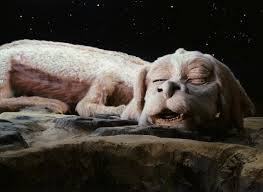
Not sure I’d agree with that, since cats are obligate carnivores and became domesticated. Seems like it would depend more on the size of the dragon in question.
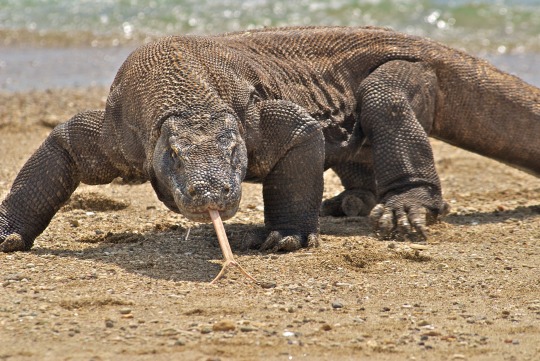
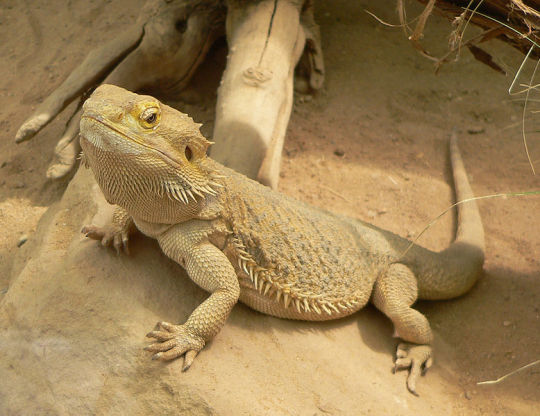
Also, being reptiles, I think they’d actually be less expensive to feed than a carnivorous mammals since reptilian metabolisms tend to be slower, which is why snakes and lizards can go a very long time between meals if the food happens to be big enough.
Oh cats and dogs are most certainly carnivores, but they happen to also be pack animals, relatively safe to interact with, and have an ideal maturation rate and brood size for breading. They manage to tick some boxes which make them legitimate for domesticating.
Elephants come to mind as something less than ideal to tame that humans just, decided to tame anyway. Their maturation rate is crazy long and elephants can kill. But they are herbivores, making them deceptively cheep to feed for their size (Well, relatively, big herbivores are expensive to feed, but at least you’re paying to only feed it, not every big herbivore it ever eats) and Elephants are SUPER sociable. But even so, Elephants aren’t the most popular in terms of domestication.
Dragons meanwhile have so very little qualities which would make them good for domestication. (Being really freaking cool, terrifying in battle, and useful for travel are good incentives to try to domesticate a dragon, but it doesn’t mean an industry of domesticating them is going to be plausible.)
You’ve got me on the reptile metabolism thing. I don’t know enough about that topic to discuss it.
cats only became more sociable through domestication. so if u could domesticate a dragon having a giant animal to fly u and things long distance would be very valuable, and even though they take a long time to grow if they are passed down thru families they could be valuable
They could be bred to be more sociable through rapid selective breeding. Which is why if dragons had to be domesticated I’d choose the game of thrones ones because holy flip that dragon is an adult and only five years old. But cats were sociable to begin with, they live in prides; it’s in their nature to socialise, so humans could get all up in that.
A dragon pet being valuable doesn’t overcome a dragon being plausible. I’m sure some dragon fanatics who have the wealth, land, and disposable people to domesticate one dragon would occasionally manage to, but not civilisations.
I’m sure one guy who really loves the abstract idea of heritage would put the effort into breeding their dragon so that their great great grand daughter could have a dragon too, but there’s nothing to say that grand daughter will feel the same way about a load of descendents she’s never going to meet.
Dragons will be for the super rich fanatics, civisiations would have to make do with drawings of their kings riding them.
I’d like to point out that the “low metabolism” thing is bunk.
Dragons (as described here) would be flying animals. Giant flying animals. Giant flying animals that breathe fire. Flight is the single most costly mode of transportation ever evolved by a huge margin; birds on the wing use about 7 times the energy that they use while at rest. By comparison, we humans only use less than twice our “resting energy” while walking. As is expected, these ratios increase with an animal’s size. A dragon large enough to carry a human is gonna need a FRICKEN LOT of energy to be able to fly at all, which requires a fast metabolism to provide (yes, even if it doesn’t fly very much).
Secondly, fire. How would they produce it? They sure wouldn’t breathe fire just by thinking “burny” thoughts, and the flames most dragons are depicted as producing are strong and persistent which isn’t consistent with the common “gas bladder” explanation given by many. This suggests the production of liquid fuel, a method of ignition, and more importantly a way to throw that fuel far enough for the dragon to hit things without burning itself alive. I don’t know how it’s gonna accomplish those things, but I guarantee you that it ain’t gonna be cheap. The fuel alone would require so many kilocalories, like you wouldn’t believe how many KCs are in a napalm-like fuel, like holy crap. It’s gonna need a TON of food to produce that.
So, yeah, reptile or not, a dragon would definitely need way more food to stay alive and do dragony things than a non-dragon critter of similar size. Unless you’re a monarch who doesn’t particularly care how starving your subjects are, dragon domestication is a no-no.
^ I was thinking that while reading this post
get these dragon taming elitists of my dash
I’m glad dragons aren’t real; the dragon fandom would suck all the fun out of them.
consider this. they’re magical animals that work by magic. its the only explanation for why any thing about them makes sense. for one thing, for anything at that size to get airborn under normal circumstances, the size its wings would need to be is absurd and impractical. they work by magic becuase they’re inherently magical creatures. no one asks how a unicorn has healing powers becuase they’re understood to be magical
Screw magic. Also screw carnivore dragons.
Omnivore dragons.
A dragon marauds into an area and eats all the livestock, sure, but there’s also crops, trees, plants, houses, etc. Why should dragons just eat all the sheep in an area when they can break the grain silo open and go to town? Devastate a year’s worth of harvests then try to waddle away because they’re too fat to fly (like a gorged vulture).
Even “carnivores” like bears and wolves will eat fruit, nuts, grass, things, etc because it’s easier than chasing down prey. Why restrict dragons? Why insist dragons are too discerning?
Omnivore dragons ftw.
That’s a point. What’s the benefit of being strictly a carnivore anyway? Digesting things becomes a lot easier, but dragons are BIG, they should have room for enough stomachs to eat just, all the trees.
Simply put, the benefit of being a hypercarnivore (having a diet comprised 70% or greater of animals) is indeed that digesting things becomes a lot easier.
Foraging is a very expensive activity. To make the investment of food-collection worthwhile, an animal needs returns on whatever it eats that outweigh that investment. Cows eat grass, need to spend pretty much all of their time grazing just to turn an energetic profit, and their lifestyle is hardly a fast-paced one. Cheetahs, on the other hand, eat tasty tasty dead things only every once in a while, and theirs is the most fast-paced life of any terrestrial vertebrate. The tradeoff is that they can’t afford to do anything but rest while they’re not foraging.
Back to the issue at hand, why should a dragon be strictly carnivorous? Let’s look at the numbers: A pound of grain (in this case wheat) has about 1,500 kilocalories of available energy, while a pound of classic Dragon Food (sheepies!) only has about 1300. From just this, the argument for the “omnivorous harvestfucker” dragon is pretty convincing! However, lean meat is not the only component of sheep. They’re also full of tasty fat (3500 KCal/lb) and bone marrow (3500 KCal/lb).
Assuming your average sheep weighs ~150 pounds and has a median bodyfat content of ~15%, a hungry dragon can expect to net a whopping 275000 kilocalories from a single animal. Compare that to the 225000 kilocalories from a similar mass of grain. It may not seem like much, but when you’re a massive hypercarnivore that 50 million calorie difference is a huge motivator.
So while I’m not completely opposed to the idea of omnivorous dragons, I’d wager that if they existed they’d be eyeing the waddling balls of penned mutton more often than fortified grain silos.
Dragons taming humans makes much more sense.
Yes, but all this feeding talk is completely redundant if you can’t catch and pen one to begin with.
Like, look at buffaloes. They’re grazing animals that produce meat and fur that can, and historically has, been used for food and shelter. And yet, they have only very recently been domesticated. Not because ancient people didn’t want to domesticate them, but because they couldn’t. Buffaloes are huge and they will attack you if you mess. It’d be like being attacked by a steamroller.
That’s the same reason why we’ve never domesticated lions or tigers or bears (oh my). As cool as it would be to ride a friggin’ war bear into battle, they’re just not good for domestication to get your war bear in the first place. When you just have a stick with a pointy rock on one end, maybe a sheet of metal covering your torso, and more gumption than is good for you and your going up against something at least twice your size with daggers attached to each of its toes and no problem attacking you to defend itself, your not gonna win.
Dragons, in most depictions, are big as houses with diamond hard scales, have claws the size of people, and, in many stories, have human like intelligence (which brings up a moral aspect to domestication). Oh yeah, and they can fly.
Maybe the odds of achieving a capture of one would be plausible now in modern times where we have the technology to match their power, but in medieval times, you can get a group of fifty of the strongest warriors to try and catch one, but the only thing you can be guaranteed is that most of them will die in the process, assuming that the dragon doesn’t just fly off to begin with, in which the warriors would have no way of following. And then, assuming by some miracle they do manage to catch one, they still have to catch a second one for breeding. And after the lose of life capturing the first one, you’ll be hard pressed to find people willing to go after a second one.
The only way around that is if your dragons are no bigger than horses
with little natural protection
to begin with and then you breed them into the large powerhouses you see in stories (that’s what they did in the Pern novels by Anne Mccaffrey).
And then you’ve got the dragons with human like intelligence. There’s no domesticating them, because then it’s slavery. But, alliances can be brokered with them, which means awesome dragon societies.
But wait, there is a third option here. Dragons (of the non-human like intelligence variety) do like cats did and domesticate themselves.
Because why bother stealing food from the humans when you can just get the humans to willingly give the food to you. You might have to do a bit of guard work for them or let them ride on your back or go attack other humans for them, but in return you get fed choice meals, get better places to sleep in beside a cave (that will increasingly improve with human technology), have a safe place away from predators to have your eggs, have that hard to reach spot scratched for you whenever it gets itchy, and just over all have a more secure life than you would’ve trying to survive on your own in the wild.
In short, if you watch over the sheepies and protect them from predators and thieves for a few hours, you will get to eat some of the sheepies in reward, which takes a lot less effort than trying to steal them yourself.
Because quite frankly, one of the best survival techniques for non-humans is to be useful to humans. Because we are super clingy that way.
Ahhhhh symbiosis of sorts…. I like that.
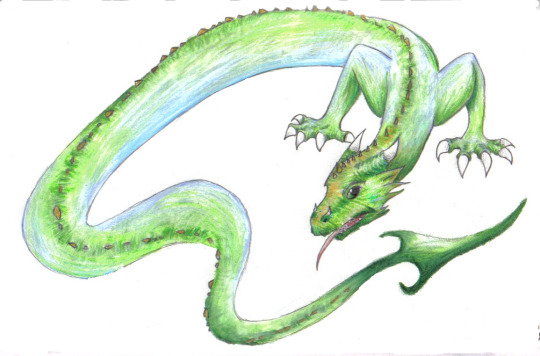
Consider also: Chinese dragons.
There’s no problem with explaining the fire-breathing ability (I suppose they don’t do that, seeing as most are associated with water, although there’s a fire dragon too). They have many other mystical abilities as well, like flying (sometimes without wings), controlling the weather or shapeshifting.
Also, this website says that there were four Dragon Kings who lived in crystal palaces guarded by shrimp soldiers and crab generals and the mental image is amazing (there’s other interesting things about dragons, too).
If you really want domesticated dragons, the best solution would probably be some kind of mystical or telepathic bond between humans with some special abilities that allow that and (semi-)sentient dragons. Maybe the dragon-taming civilization has an origin story like “human saves lost dragon baby, raises it, dragon grows up and helps human to conquer a realm”. Then the dragon and its descendants stay with the human’s family/people and they have that symbiosis.
Or you could just stick to sentient dragons who live on their own, are treated like demigods (or demons) by local humans (if they haven’t eaten those yet), are kind of unpredictable Chaotic Neutral (like, they may help a human if they’re in a good mood – but run into an unhappy dragon and you’ve got a big problem), or they’re Chaotic Evil like Tolkien’s dragons.


 radiantanor.home.blog